
Section 67. Klaipėda – Palanga. Seaside resorts.
Section 67. Klaipėda – Palanga.
Worth seeing
 Worth seeing
The youngest Lithuanian university was established in the historical buildings of neogothic barracks built in the beginning of the 20th century. |
|
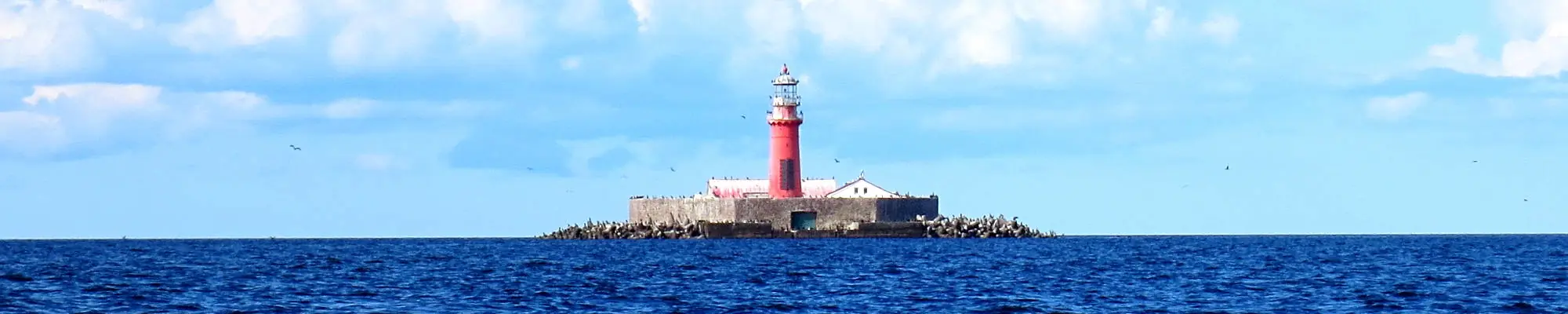
This is the place where the Curonian Lagoon is connected to the open sea and the ships sail to the port. |
|
In 2020, a new broad wooden trail was built across the dunes of Melnragė seaside. The trail has playgrounds, rest areas and information stands presenting the seaside plants and animals. |
|
|
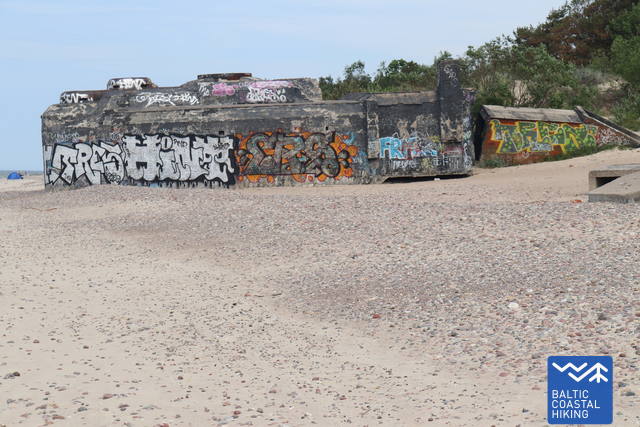
The German artillery battery from the Second World War has been perfectly preserved. It houses a museum and offers educational programs. |
|
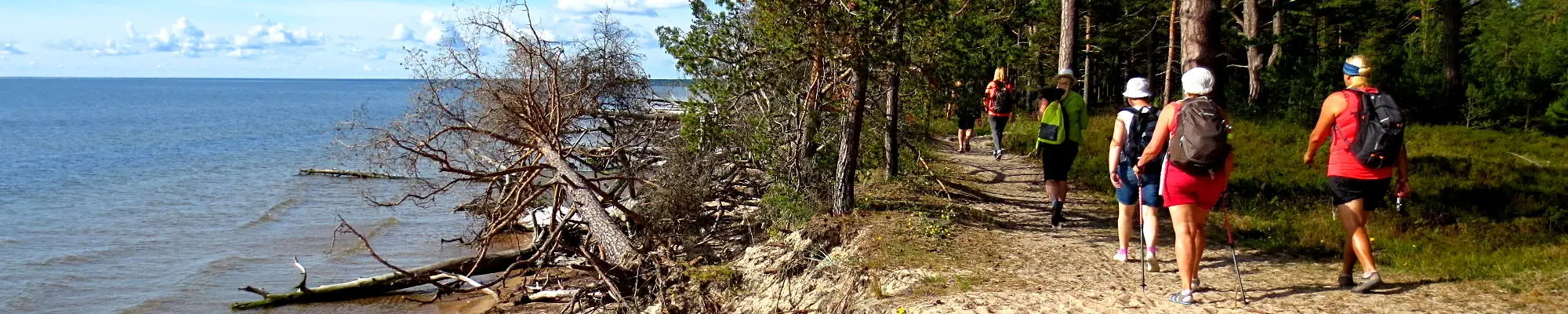
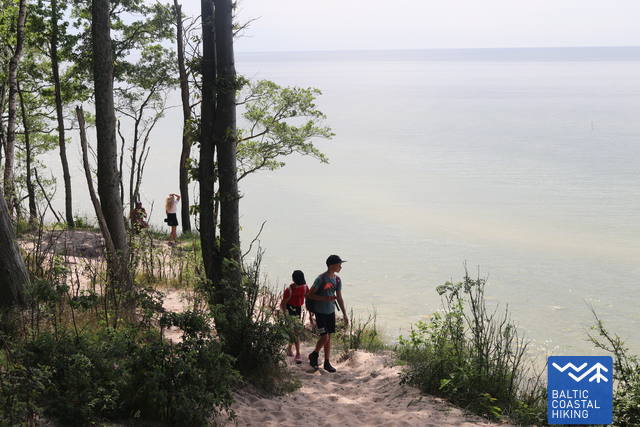
The trail winds along the steep 15-meter-high shores of the sea, revealing beautiful views of the Baltic Sea. |
|
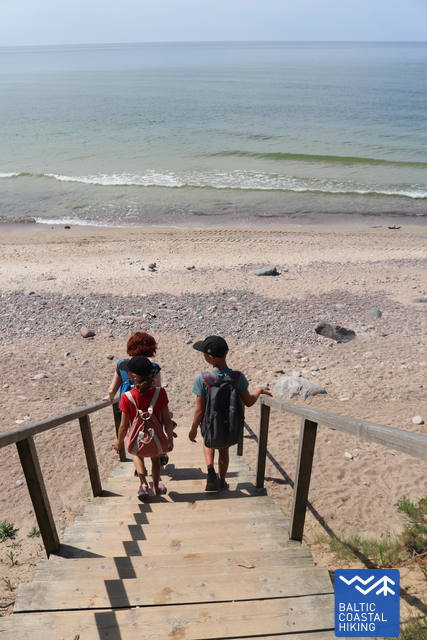
You can marvel at the sea, its steep shores and pebble beaches from 24-meter-high cliffs. |
Cairn sculptures in the seaside. |
|
The neo-renaissance manor of Tiškevičiai now serves as Amber Museum. Visitors can take walks in the Botanical Garden with ponds and the promenades among hundred-year-old trees, and visit the Birutė Hill Chapel, Guardhouse and the Sanctuary of Our Lady of Lourdes. |
|
|
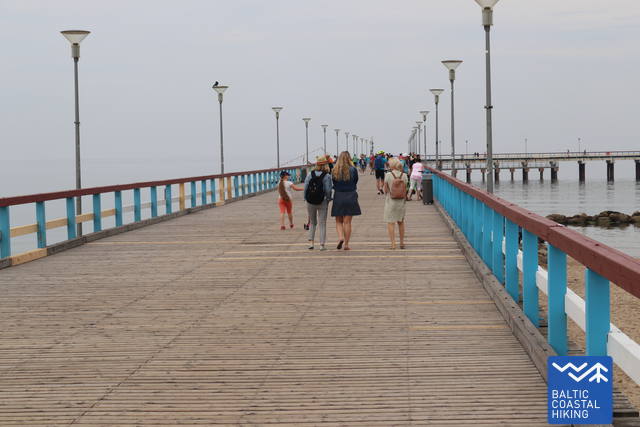
This 470-meter-long bridge is the most popular and largely visited spot in Palanga and has become its symbol. |
This is the central street and pedestrian boulevard of Palanga City. Many cafes and a variety of other entertainment options are available for visitors during the summer season. |
|
|
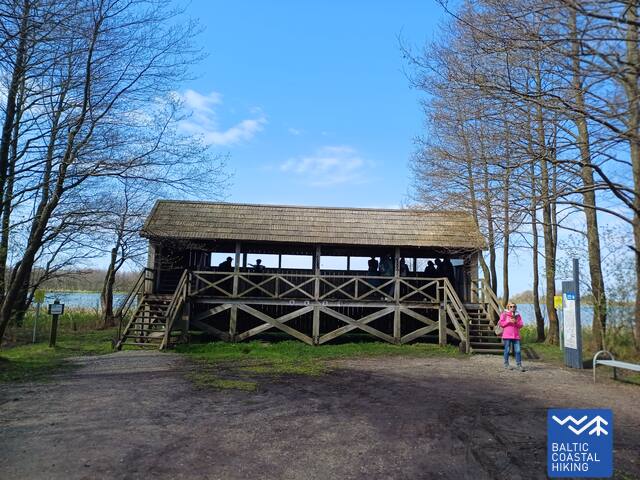
Plazė is a lake of glacial origin found at the coast of the Baltic Sea, in Plazė Nature Reserve of the Seaside Regional Park. It is the perfect spot to watch aquatic birds during their migration. Various aquatic birds come here to rest and regain their strength on their long migratory journeys from the nesting grounds in the Ob and Yenisei deltas in Northern Russia to their wintering grounds in Western Europe (Belgium, the Netherlands, Germany, and Great Britain). For visitor convenience, there is a birdwatching hut equipped with viewing binoculars in the area. Birds observed hereAt the lake, visitors might find the grey heron, the common goldeneye, the tufted duck, the northern pintail, the gadwall, the northern shoveler, the common crane, the great egret, the water rail, and the white-tailed eagle. Occasionally, a long-tailed duck might make an appearance. Colonies of great cormorants dwell on the banks of the lake.
Binoculars rentalSeaside Regional Park Visitor Centre Placio gatve 54, Karklė Ph. +370 46412483 |
|
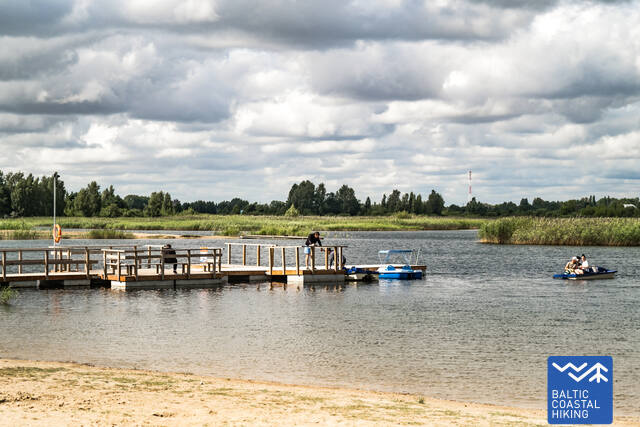
Quarry ponds are artificial bodies of water that formed due to human activity – excavating gravel and sand for construction purposes. In the long term, the quarries filled up with water, which allowed for the formation of a typical ecosystem found in standing water bodies. The quarry ponds found on the outskirts of Gargždai are no exception. Thus, an oasis for the flora and fauna typical to standing bodies of water developed here. Birds observed hereVisitors can usually see mallards, great crested grebes, and mute swans here. In Autumn and Spring, the quarry ponds might be quite the sight for birdwatchers. Birds like the tufted duck, the common goldeneye, the common merganser and the smew, the northern pintail, and the gadwall like to dwell here. Some birds live on the banks of the quarry ponds – the reedbeds. These include the common reed bunting, Savi’s warbler, the great and the Eurasian reed warblers, the western marsh harrier, and the common moorhen. At Dovilai quarry ponds, visitors might also see species included in the Red Data Book of Lithuania – the Eurasian and little bitterns. Despite it being extremely hard to spot them, hearing their songs is not that difficult. Just keep your ears open during May through July. The voice of the little bittern is reminiscent of a dog’s bark, while the Eurasian bittern sounds like blowing on a bottle. All other birds are not that difficult to spot and hear. Parking lot 55.680885, 21.370948 Binoculars rentalKlaipėda district tourism information centre Kvietinių gatve 5-2, Gargždai Ph. +370 62081901 |

Sehenswert!
1. Gebäudekomplex der Universität. Die jüngste Universität Litauens befindet sich in den historischen, im 20. Jh. erbauten neogotischen Militärkasernen. GPS: 55.72416, 21.12403
2. Pier/Mole von Melnragė, Meerestor. Hier mündet das Kurische Haff in das Meer wo die Schiffe ihren Weg in den Hafen oder in die Ferne finden. GPS: 55.73026, 21.08086
3. Kognitiver Wanderweg von Melnragė - Promenade. Im Jahr 2020 m. wurde ein breiter Holzweg durch die Dünen von Melnragė neu angelegt. Begleitet von Spielplätzen, Erholungsinseln und Infoständen über die Meeresflora und Fauna - bietet er abwechslungsreiches und informatives Programm. GPS: 55.732505, 21.087045
4. Militärbefestigungen von "Memel Nord“. Die gut erhaltene Deutsche Küsten-Artillerie-Batterie aus dem Zweiten Weltkrieg beherbergt ein Museum und eine Bildungseinrichtung. GPS: 55.77823, 21.07425
5. Ökologischer - Lehrpfad "Litorina". Unterwegs bleibt der herrliche Panoramaausblick auf die Ostsee, entlang der steilen, bis zu 15 Meter hohen Hänge zum Meer.
GPS: 55.79654, 21.06790
6. Umhang "Olando kepurės" (dt. der Hut/die Mützen des Holländers). Von der Klippe in einer Höhe von 24m, genießen die Augen einen fantastischen Ausblick auf das Meer, sowie auf die steilen Ufern und die steinigen Strände. GPS: 55.79831, 21.06742
7. „Fredo parkas“( dt. Freds Park). Balancierende Steinskulpturen am Meer.
GPS: 55.84729, 21.05962
8. Herrenhaus/Schloss von Palanga und der Park. Umgeben von Teichen und Alleen, präsentiert sich das hier eingerichtete Bernsteinmuseum im Herrenhaus Tiškevičiai im Neorenaissance-Palast. Weiter zeigt sich der botanischer Park mit seinen Teichen und Alleen, umfasst von gewaltigen hundertjährigen Bäumen. Für eine stille Minute zum Verweilen eignet sich auf dem Berg-Birutės eine Kapelle, ein Wachhaus und eine Lourdes-Grotte. GPS: 55.90750, 21.05620
9. Brücke von Palanga. Die 470 m lange Brücke ist der beliebteste und meistbesuchte Ort in Palanga, die zum Wahrzeichen des Ortes geworden ist. GPS: 55.92013, 21.04721
10. J. Basanavičiaus-Straße in Palanga. Es ist die zentrale Straße-Boulevard der Stadt. Während der Sommersaison gibt es viele Kaffees und verschiedene Unterhaltungsmöglichkeiten. GPS: 55.91908, 21.05598