
Лесная тропа прибалтики - Wheelchair accesible

 1. Etappe. Altstadt von Riga – Baltezers.
Durch Altstadt von Riga – UNESCO-Weltkulturerbe
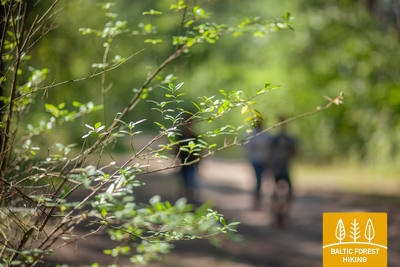
Der Baltische Wald-Wanderweg (lettisch Mežtaka) beginnt am Rathausplatz im Herzen der Rigaer Altstadt. Die ersten Kilometer verläuft der Weg entlang der Kaļķu Straße und am Freiheitsdenkmal vorbei, durch den Vērmanes-Garten und die historische Tērbatas Straße. Weiter führt die Strecke über eine Fußgängerbrücke am Zemitānu-Bahnhof und durch den städtischen Biķernieku-Wald und den Šmerļa-Wald. Der Wanderweg durchquert den Stadtbezirk Jugla, vorbei am ethnographischen Freilichtmuseum Lettlands und erreicht über Fußgänger- und Fahrradwege die Ortschaft Baltezers.
The "Feel Jugla" Walking Trail
Im nordöstlichen Teil des Jugla-Sees in Jugla wurde ein 250 Meter langer Holzsteg (einfache Strecke) mit einer Aussichtsplattform mit Blick auf den Jugla-See, einer Bank, 20 taktilen Raumreliefs mit Darstellungen charakteristischer Tierarten des Sees und seiner Umgebung sowie Informationen in Blindenschrift angelegt. Der Weg ist für Rollstuhlfahrer zugänglich. Der Standort liegt 0,5 Kilometer vom Mežtaka-Pfad entfernt.


 4. Etappe. Rāmkalni – Sigulda.
Die schönsten Ausblicke auf das Gauja-Urstromtal in Sigulda
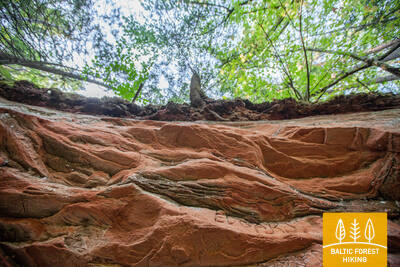
Hinter „Rāmkalni“ führt der Baltische Wald-Wanderweg die Steilufer des [Gauja-Urstromtals hinan, passiert das gleichnamige Dorf und führt die Wanderer wieder herunter ins Tal. Weiter überquert der Weg den Lorupe-Fluss und schlängelt sich die Windungen der Gauja entlang, bis er auf einen der eindrucksvollsten Felsen – den Velnala– trifft. Danach wandert man an der sogenannten Kaiseraussicht (Ķeizarskats) und dem Kaiserstuhl (Ķeizarkrēsls), dem Kletterpark „Mežakaķis“ auf dem Kaķīškalns-Hügel sowie der Bob- und Rennrodelbahn Sigulda vorbei, bis der Wanderweg das Stadtzentrum von Sigulda erreicht.
Trail to Gutman's cave
Vom Parkplatz des Besucherzentrums Gūtmaņala (GPS: 57.176245, 24.846747) führt der Weg zu einer der beliebtesten Attraktionen des Gauja-Nationalparks – Gūtmaņala. Die Wegoberfläche besteht aus Schotter und Asphalt mit einer Breite von 1,15 bis 2 Metern. Der Weg ist 0,5 Kilometer lang (Hin- und Rückweg) und für Rollstuhlfahrer mit einer Begleitperson zugänglich. Der Aufzug im Tunnel funktioniert nicht! Es ist notwendig, die Straße zu überqueren, wo es einen kleinen Bordstein gibt! Eine behindertengerechte Toilette ist vorhanden. Der Weg liegt 2,7 Kilometer vom Mežtaka-Weg entfernt.


5. Etappe. Sigulda – Līgatne.
Im Herzen des Nationalparks Gauja
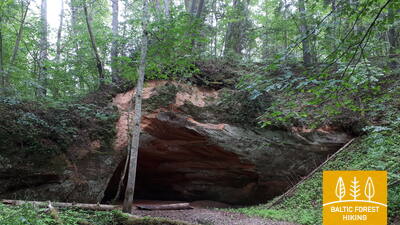
Hinter Sigulda setzt sich der Baltische Wald-Wanderweg entlang des linken Ufers des Vējupītes-Flüsschens fort. Man gelangt bis zum Paradīze-Hügel und steigt die steile hölzerne Treppe hinab, bis man das Gauja-Urstromtal und die Vējupītes-Schlucht erreicht. Der größte Teil dieser Etappe verläuft weiter auf engen, verlassenen Waldpfaden und über kleine Wiesen (im Juni blühen die Pechnelken), durchquert mehrere kleine Täler mit Sandsteinfreilegungen. Die letzten sechs Kilometer führen auf einem kleinen Weg an den Līgatne-Naturpfaden entlang. Vor der Ankunft in Līgatne führt der Baltische Wald-Wanderweg die Böschung des Gauja-Urstromtals hinauf und später wieder ins Līgatne-Flusstal hinab. Am Ufer dieses Flüsschens liegt die ehemalige Siedlung der Papierfabrik Līgatne.
Trail to Paradise Hill
Vom Parkplatz in der Miera-Straße (GPS: 57.170624, 24.862061) aus können Sie Gleznotājkalns auf einem etwa 2 Kilometer langen Rundweg erkunden. Der Weg ist für Rollstuhlfahrer und Eltern mit Kinderwagen zugänglich. Die Oberfläche besteht aus Asphalt, Schotter und Holzstegen (Brücken). Der Weg ist nicht markiert, an Kreuzungen gibt es jedoch Schilder. Der Abschnitt vom Parkplatz nach Gleznotājkalns entspricht dem Mežtaka-Weg.
Līgatne Nature Trails
Die Naturpfade von Līgatne sind eine der beliebtesten Attraktionen im Gauja-Nationalpark. Hier leben Tiere, die für die lettischen Wälder typisch sind, unter Bedingungen, die ihrem natürlichen Lebensraum nahe kommen. Zwei Abschnitte der Pfade vom Besucherzentrum „Pauguri“ sind für Rollstuhlfahrer zugänglich: einer führt zum Bärengehege (300 Meter in eine Richtung) und der andere zum Fuchsgehege (600 Meter in eine Richtung). Das Besucherzentrum verfügt über behindertengerechte Toiletten und einen ausgewiesenen Parkplatz (GPS: 57.248149, 25.014735). Es befindet sich neben dem Mežtaka-Pfad.


 6. Etappe. Līgatne - Cēsis.
Auf alten Wegen druch das Amata-Tal nach Cēsis
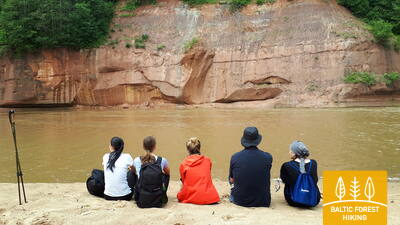
Eine der landschaftlich schönsten Etappen des Baltischen Wald-Wanderweges führt durch die Siedlung der ehemaligen Papierfabrik Līgatne, schlängelt sich auf dem Skaļupes-Pfad und dem mythologischen Pfad an den Spriņģu-Felsen vorbei und kommt an einem skurrilen Objekt aus der Zeit des Eisernen Vorhangs vorbei - dem unterirdischen Sowjetbunker. Weiter setzt sich die Wanderung entlang des Naturschutzgebiets Roči fort, überquert den Amata-Fluss und erreicht über einen geologischen Pfad (die schönste und felsenreichste Strecke entlang der Amata) den Zvārtes-Felsen. Dann führt der Wanderweg das steile Ufer des Amata-Tals hinauf und führt weiter über den historischen Weg von Riga nach Cēsis, den Rakši-Zoo, den Vāļukalns- und Ozolkalns-Hügeln auf den Cīrulīšu-Naturpfaden, die eine Reihe von Sandsteinfelsen und Quellen zu bieten haben. An der Gaujas Straße ist diese Etappe der Wanderung zu Ende. Falls Sie noch über ein wenig Energie verfügen, würde sich ein Besuch der nur 2,8 km entfernten Altstadt von Cēsis unbedingt lohnen!
The trail to Zvanu Cliff
Der 900 Meter lange Weg führt zum Hang des Hauptufers des Gauja-Tals, wo sich die Zvanu-Felsen erheben und eine Aussichtsplattform befindet. Der Weg ist 1,5 Meter breit und hat eine Holzstegoberfläche. Der Weg ist für Rollstuhlfahrer mit Hilfe einer Begleitperson zugänglich, da zum Zugang zum Weg ein Bordstein überwunden werden muss und der Hang an einigen Stellen zu steil ist. Es gibt keine Parkplätze oder Toiletten. Auf der Straßenseite daneben gibt es eine sandige „Tasche“, in der Sie das Auto abstellen können. Der Weg befindet sich neben dem Waldweg.


7. Etappe. Cēsis - Caunītes.
Eindrucksvolle Sandsteinfelsen an den Ufern der Gauja
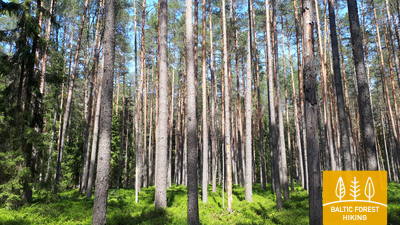
Bis zur Wassertouristenunterkunft „Lenči“ verläuft der Baltische Wald-Wanderweg auf Pfaden, die von Wäldern und den Windungen und Altarmen der Gauja eingerahmt werden. Kurz vor den Ērģeļu-Felsen verändert er sich – mal geht es über die steilen und quellenreichen Böschungen des Gauja-Urstromtals hinauf, dann wieder hinunter in die Schlucht. Hinter den Ērģeļu-Felsen führt der Wanderweg wieder ein Stück in Richtung Cēsis, biegt dann aber in Pieškalni gen Rāmnieki ab und überquert dort die Gauja über eine Brücke. Hinter der Wassertouristenunterkunft „Jāņrāmis“ führt der Baltische Wald-Wanderweg mit mehreren kleinen Kurven durch einen schönen, lichten Nadelwald und erreicht mit „Caunītes“ einen der schönsten Rastplätze am Ufer des Flusses.
Ērgļu (Ērģeļu) Cliffs Nature Trail
Der Weg führt die Besucher zu einem der eindrucksvollsten Sandsteinfelsen Lettlands. Er verbindet die Klippen mit dem Parkplatz (GPS: 57.357495, 25.262360). Der 460 Meter lange Weg (einfache Strecke) folgt einem Waldweg und ist für Rollstuhlfahrer mit Hilfe geeignet. Der Weg ist sehr steil! Eine behindertengerechte Toilette ist vorhanden. Der Weg stimmt mit dem Mežtaka-Weg überein.


9. Etappe. Valmiera - Strenči.
An den Ufern des Abuls-Flusses entlang in die alte Flößerstadt Strenči
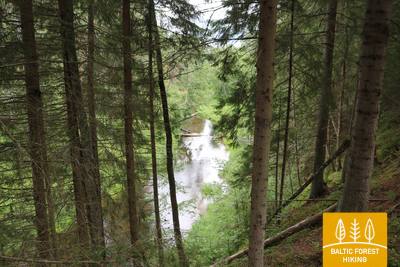
Der Baltische Wald-Wanderweg durchquert das historische Stadtzentrum von Valmiera und einen Erholungspark mit mehreren Wander- und Nordic Walking Routen, führt über eine Schrägseilbrücke und passiert im weiteren Verlauf die Pauku-Kiefern und den Baiļu-Hügel. Auf dem Abuls-Pfad, der sich entlang der steilen und wilden Ufer des Flusses schlängelt, geht der Wald-Wanderweg bis zur Bierbrauerei Brenguļi weiter. Hinter der Siedlung Pūpoli wandert man durch dünn besiedelte Gebiete und großflächige Waldmassive. Die erste Hälfte dieser Strecke zeichnet sich durch die vielen Sommerhaussiedlungen – Enerģētiķis, Saulītes, Sprīdītis, Gaujmaļi, Pūpoli und Gaujaslāči – aus, die während der Sowjetzeit für die Arbeiter der Industriebetriebe von Valmiera und Umgebung eingerichtet wurden. Im weiteren Verlauf führt der Weg bei Ūdriņas durch ein Altarm-Labyrinth, biegt dann nördlich ab und überquert die Gauja über eine Brücke, an der eine Anlegestelle für Kanufahrer und ein Freizeitplatz eingerichtet sind. Von hier aus sind es noch etwa anderthalb Kilometer bis zum Ortskern von Strenči. Ein Teil dieser Strecke verläuft durch das Landschaftsschutzgebiet „Nord-Gauja“.
Strenči Nature Trail and Wooden Sculpture Park
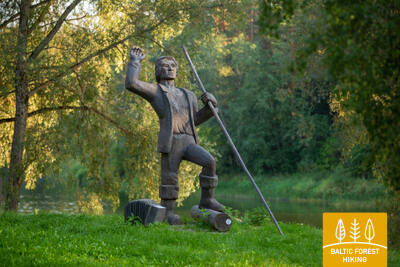
Das Thema des Pfades sind die Gauja-Flößer, mit etwa 30 Skulpturen. Der Pfad kann vom Parkplatz in der Ozolu-Straße aus begonnen werden (GPS: 57.623436, 25.690133). Er besteht aus zwei Schleifen, 5 und 7 Kilometer lang, aber der Abschnitt, der für Rollstuhlfahrer mit Hilfe geeignet ist, ist relativ kurz. Er liegt 0,7 km vom Waldpfad entfernt.


10. Etappe. Strenči – Spicu-Brücke.
Durch die pilz- und beerenreichen Wälder von Vidzeme
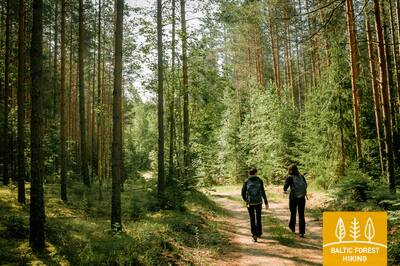
Diese Etappe des Baltischen Wald-Wanderweges startet am Beginn des Gauja-Naturpfads, der längs des Flusses führt. An zwei Stellen (vor dem Abbiegen nach Seda und bei Kauči) überquert der Wanderweg die Schnellstraße A3 (Vorsicht!), setzt sich dann auf kleinen Waldwegen entlang eines Sand- und Kiestagebaus fort und bringt die Wanderer vor dem Abbiegen nach Oliņas auf eine Straße mit Sandbelag Nach 3,5 km auf dieser Straße biegt man rechts ab und setzt die Wanderung bis zur Spicu-Brücke über kleine und einsame Waldwege fort. Hinter der sogenannten Niedrigen Insel (Zemā sala) bietet sich eine der schönsten Aussichten im ganzen Landschaftsschutzgebiet „Nord-Gauja“. Am Ende der Etappe, wo die Autostraße P24 die Spicu-Brücke überquert, befindet sich ein Rastplatz und eine Wassertouristenunterkunft.
The rest area by Spicu Bridge
Der Rastplatz am Waldweg ist für Rollstuhlfahrer zugänglich. Es wurden spezielle Tische aufgestellt und die Toilette ist angepasst.


11. Etappe. Spicu-Brücke – Zaķi.
Through the magnificent Cirgaļi dunes
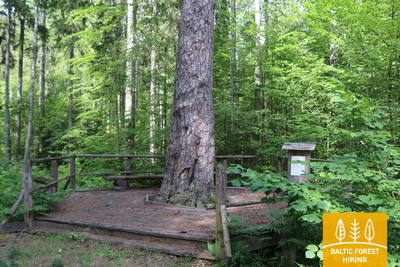
Der Baltische Wald-Wanderweg überquert die Spicu-Brücke und schlängelt sich bis zu den vier Kokšu-Seen (ca. 4 km) weiter, die als eine Kette durch einen kleinen Bach miteinander verbunden sind. In der Nähe der Seen gibt es mehrere Erholungs- und Zeltplätze sowie Naturlehrpfade. Es bieten sich Ausblicke auf wunderbare Landschaften und auf an Pilzen reiche Wälder. Nach dem letzten der Kokšu-Seen, dem Dibena, wandert man weitere eineinhalb bis zwei Stunden und erreicht das Cirgaļu-Dünenmassiv, welches in Nord-Süd-Richtung überquert wird. Auch im weiteren Verlauf passiert der Wanderweg großflächige Wälder, in die kleine Weiler und Seen eingesprenkelt sind. Die Etappe endet in der kleinen Ortschaft Zaķi. Hier gibt es jedoch weder Läden noch Dienstleistungen, weshalb die Transport- und Übernachtungsmöglichkeiten im Voraus geplant werden müssen. Die Strecke führt durch das Landschaftsschutzgebiet „Nord-Gauja“.
The rest area by Spicu Bridge
Der Rastplatz am Waldweg ist für Rollstuhlfahrer zugänglich. Es wurden spezielle Tische aufgestellt und die Toilette ist angepasst.
22. Etappe. Ristipalo – Mehikoorma.
Durch die Polderwiesen des Peipussees
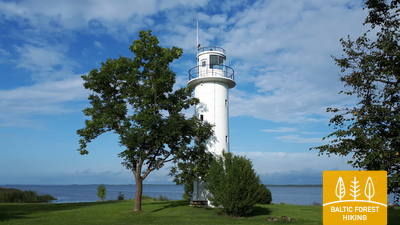
Etwa die Hälfte dieser Etappe führt der Baltische Wald-Wanderweg auf den geraden Wegen zwischen den Polderwiesen des Peispussee-Tieflandes (Peipsi järv). Die Polder sind zum Schutz der Gegend vor Frühjahrsüberschwemmungen angelegt worden. Die flachen Areale werden für die Landwirtschaft und als Weideland genutzt. Zwischen Naha und Mehikoorma verläuft der Wanderweg am Rande der Landstraße Räpina–Mehikoorma. Am Leuchtturm Mehikoorma bieten sich schöne Aussichten auf die Landschaft des Lämmijärv-Sees. Dieser See verbindet den Pleskauer-See (Pihkva järv) im Süden mit dem Peipussee im Norden. Das gegenüberliegende Ufer des Lämmijärv (1,7 km) liegt bereits in Russland.
Mehikorma Harbor Shore Promenade
Zwischen dem Hafen von Mehikorma und dem Leuchtturm wurden ein Naturpfad und eine Promenade angelegt, die die Uferlinie des Peipussees auf einer Länge von 1,3 km vorstellen. Ein Teil davon, einschließlich der Promenade und des Holzstegs, ist für Rollstuhlfahrer mit Hilfe einer Begleitperson zugänglich. Der Pfad befindet sich neben dem Waldpfad.
23. Etappe. Mehikoorma – Lääniste.
Rund um das Emajõe-Suursoo-Feuchtgebiet
Hier zeigt der Baltische Wald-Wanderweg, dass er den richtigen Namen trägt, denn die dreitägige Etappe führtrund um eines der größten Feuchtgebiete Estlands, das bewaldete Emajõe-Suursoo-Feuchtgebiet. Die einzige Siedlung zwischen dem Jõepera- und dem Ahja-Fluss ist das vom Wald umgebene Dorf Järvselja. Die Landschaft ist flach, weil der Wanderweg noch immer durch das Peipussee-Tiefland führt. Die Strecke endet am Ahja-Fluss, dessen Mittellauf mit seinen malerischen Sandsteinfelsen aus der Devon-Periode auch bei Freunden des Kanusports.
Mehikorma Harbor Shore Promenade
Zwischen dem Hafen von Mehikorma und dem Leuchtturm wurden ein Naturpfad und eine Promenade angelegt, die die Uferlinie des Peipussees auf einer Länge von 1,3 km vorstellen. Ein Teil davon, einschließlich der Promenade und des Holzstegs, ist für Rollstuhlfahrer mit Hilfe einer Begleitperson zugänglich. Der Pfad befindet sich neben dem Waldpfad.
25. Etappe. Kavastu – Varnja.
Auf dem Weg zum Altgläubigendorf Varnja
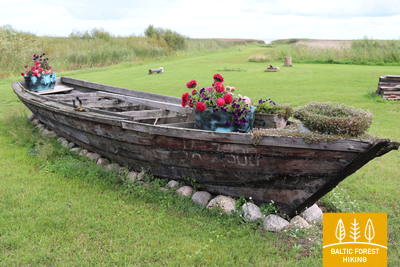
Schon den dritten Tag nacheinander führt der Baltische Wald-Wanderweg um das Emajõe-Suursoo-Feuchtgebiet (gehört zum Naturschutzgebiet Peipsiveere). Auf der Strecke zwischen Vanaussaia und Varnja wird es dort am spanndendsten, wo der Wanderweg auf kleinen Landwegen verläuft. Vor Varnja erreicht die Etappe den Peipussee Hier angekommen staunt man über die Größe des Sees! Die weitere Strecke von Varnja bis Remniku kann in einer Woche zurückgelegt werden. Der Weg verläuft an den Ufern des Peipussees und in seiner Umgebung und macht mit der traditionellen Kultur des östlichen Estlands bekannt: Zwiebelanbau, Fischfang, regionaler Küche, Handwerk und den religiösen Gebräuchen der Altgläubigen.
Emajõe-Suursoo trail
Am Emajegi-Suursoo Center beginnt ein 3 km langer Wanderweg, der durch Waldgebiet und Feuchtgebiete entlang des Emajegi-Flussufers führt. Der Abschnitt des Wanderwegs, der über einen Holzsteg führt, vom Start bis zur zweiten Lagerfeuerstelle, ist 700 Meter lang und für Rollstuhlfahrer zugänglich. Die Breite des Wanderwegs in diesem Abschnitt beträgt 1,2 Meter. Der Parkplatz befindet sich hier: GPS: 58.382315, 27.105629. Er ist etwa 2,6 km vom Waldwanderweg entfernt.


35. Etappe. Vasavere – Toila.
Auf dem Weg Steilküste bei Toila Nordestlands bei Toila
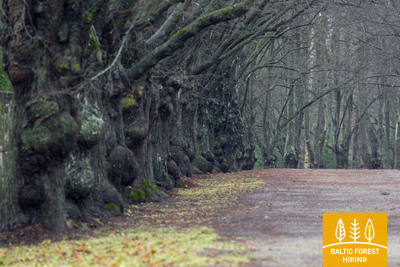
Hinter Vasavere verläuft der Baltische Wald-Wanderweg noch eine kurze Strecke durch das Landschaftsschutzgebiet Kurtna, führt dann um einen Torfabbau, durchquert das Dörfchen Oru und erreicht in einem Bogen um das Voka-Flusstal die Ostseeküste, wo er sich in Richtung Westen fortsetzt. Am Ufer des Finnischen Meerbusens ragt die waldbewachsene nordestnische Steilküste, auch Baltischer Glint genannt, in fast schwindelerregende Höhen. Dieser Kalksteinsockel erstreckt sich – mit ein paar Unterbrechungen – bis nach Tallinn und dann weiter bis zu den westestnischen Inseln – mal als Steilküste direkt am Meer, mal als Höhenzug im Binnenland. Der Baltische Wald-Wanderweg verläuft über weite Strecken auf dem Glint und verlässt ihn nur, um in einige Flusstäler hinabzuführen. Im Park von Toila-Oru überquert der Pfad das recht tiefe und weitläufige Tal des Pühajõgi und erreicht anschließend den bekannten Küstenkurort Toila.
Toila - Oru Park
Der Park kann teilweise mit dem Rollstuhl vom Parkplatz Karu Gate entlang der Lindenallee erkundet werden. Der Park verfügt über ein Netz hauptsächlich aus Schotterwegen. Aufgrund des Geländes vor Ort ist ein Assistent erforderlich. Der Teich und die Heballika-Quellenhöhle (Hõbeallika) sind für Rollstuhlfahrer nicht zugänglich. Der Waldpfad durchquert den Toila-Oru-Park. Der Parkplatz befindet sich bei GPS: 59.418662, 27.531208.


36. Etappe. Toila – Saka.
Die malerische Steilküste zwischen Toila und Saka
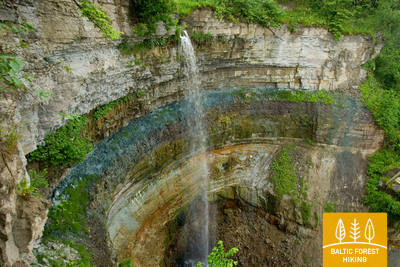
Einer der imposantesten Streckenabschnitte des Baltischen Wald-Wanderweges führt vom Fuße der nordestnischen Steilküste bei den Dörfern Valaste und Saka die Felswand hinauf. Von hier oben eröffnet sich Ihnen eine atemberaubend schöne Aussicht auf den Finnischen Meerbusen. Auf der ca. 23 km langen Strecke von Toila über Ontika nach Saka erreicht die Steilküste ihre maximale Höhe von 55 Metern. Bei klarem Wetter kann man von hier aus die 50 km weit entfernten, zu Russland gehörenden Inseln Suur Tütarsaar und Väike Tütarsaar erkennen.
Toila - Oru Park
Der Park kann teilweise mit dem Rollstuhl vom Parkplatz Karu Gate entlang der Lindenallee erkundet werden. Der Park verfügt über ein Netz hauptsächlich aus Schotterwegen. Aufgrund des Geländes vor Ort ist ein Assistent erforderlich. Der Teich und die Heballika-Quellenhöhle (Hõbeallika) sind für Rollstuhlfahrer nicht zugänglich. Der Waldpfad durchquert den Toila-Oru-Park. Der Parkplatz befindet sich bei GPS: 59.418662, 27.531208.
41. Etappe. Eisma – Oandu.
Durch den Nationalpark Lahemaa
Hinter dem Dörfchen Vainupea überschreitet der Baltische Wald-Wanderweg die Grenze zum ältesten estnischen Nationalpark – Lahemaa. Ins Deutsche übersetzt bedeutet dies „Land der Buchten“. Mehr als fünf Tage wird die Wanderung durch die an Halbinseln und Buchten reiche Küstenlandschaft des Nationalparks dauern. Während dieser Zeit werden Sie die wichtigsten Natur- und Kulturschätze der Gegend kennenlernen. Achten Sie bitte auf die im Nationalpark teilweise geltenden besonderen Regeln.
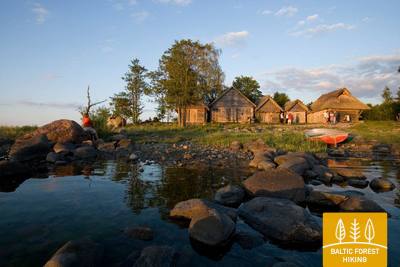
Auf dieser Etappe verläuft der Weg durch schöne und stille Küstenwälder, in denen im Herbst unzählig viele Pilze und Beeren wachsen. Später erreichen Sie das malerische Fischerdorf Altja. Gegen Ende der Etappe kommen Sie im Nachbardörfchen Oandu zum Besucherzentrum des Estnischen Forstamtes (RMK), wo Sie interessante Informationen zu Waldbiotopen und zur Forstgeschichte erhalten können.
Sagadi - Oandu Forest Fairy Tale Trail
Der 5,6 km lange Weg verbindet das Oandu-Besucherzentrum mit dem Sagadi-Anwesen im Lahemaa-Nationalpark. Die ersten 3 km des Weges sind für Rollstuhlfahrer zugänglich. Der Weg beginnt am Oandu-Besucherzentrum, wo es einen Parkplatz (GPS: 59.565440, 26.099671) und eine behindertengerechte Toilette gibt. Es liegt in der Nähe des Waldwegs.


42. Etappe. Oandu – Käsmu.
Idyllisches "Kapitänsdorf" Käsmu
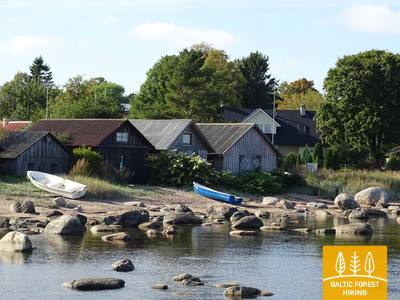
Die etwa 9 km lange Strecke zwischen Oandu und Võsu verläuft durch eine schöne, waldbedeckte Binnendünenlandschaft. An manchen Kiefernstämmen sind eigenartige Muster zu sehen, die auf eine ehemalige Harzgewinnung hindeuten. Harz wurde in den baltischen Wäldern bis in die 70er Jahre des 20. Jahrhunderts gewonnen. Viele Baumstämme sind dicht mit Flechten bewachsen, die ein Indikator für reine Luft sind. Im Herbst finden sich Pilze sowie Heidel- und Preiselbeeren am Wegesrand. Gefolgt von einem Abstecher nach Võsu, einem beliebten kleinen Ferienort, führt der Wanderweg entlang einer Ostseebucht durch Küstenwälder bis nach Käsmu. Hier lohnt es sich, den ganzen idyllischen Ort von Süd nach Nord zu durchwandern und die an der Spitze der gleichnamigen Halbinsel liegenden riesigen Findlingssteine zu bestaunen.
Sagadi - Oandu Forest Fairy Tale Trail
Der 5,6 km lange Weg verbindet das Oandu-Besucherzentrum mit dem Sagadi-Anwesen im Lahemaa-Nationalpark. Die ersten 3 km des Weges sind für Rollstuhlfahrer zugänglich. Der Weg beginnt am Oandu-Besucherzentrum, wo es einen Parkplatz (GPS: 59.565440, 26.099671) und eine behindertengerechte Toilette gibt. Es liegt in der Nähe des Waldwegs.
45. Etappe. Loksa – Tsitre.
Durch die Wälder und Moore der Juminda-Halbinsel
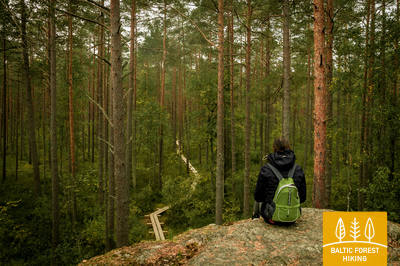
An diesem Tag durchquert der Baltische Wald-Wanderweg die Halbinsel Juminda. 7 km hinter Loksa biegt der Weg ein gutes Stück vor dem ehemaligen sowjetischen U-Boot-Hafen Hara ab. Wer den Hafen besichtigen möchte (kostenpflichtig), muss weitere 2 km zurücklegen. Im weiteren Verlauf führt der Wanderweg durch ein atemberaubend schönes Wald-Sumpf-Moorgebiet, Wald- und Sumpfgebiet, das im Westen von hohen, waldbedeckten Sanddünen eingefasst wird. Zwischen Pedaspea und Tsitre verläuft der Weg entlang einer Landstraße und kommt vor Tsitre nah an den Baltischen Glint. Nördlich liegt der Muuksi-Burghügel. Etwa 0,2 km vom Strand entfernt gibt es in Tsitre einen Rastplatz.
Viru Bog Nature Trail
Der 3,5 km lange Weg erkundet das Hochmoor und seine charakteristische Landschaft und Artenvielfalt. Der 1,3 km lange Abschnitt bis zum Turm ist für Rollstuhlfahrer mit Hilfe zugänglich. Auch die erste Plattform des Aussichtsturms und die Trockentoilette sind barrierefrei. Er liegt etwa 10 km vom Waldweg entfernt.


Tsitre Tree Trail
Der 1 km lange Pfad führt die Besucher in die Geschichte und Artenvielfalt des Tsitre Summer Manor Parks und seiner Umgebung ein. Er ist mit 29 Informationspunkten ausgestattet. Etwa 150 Meter des Pfades bestehen aus bis zu 1 Meter breiten Holzstegen, die für Rollstuhlfahrer zugänglich sind. Es gibt eine behindertengerechte Toilette. Der Pfad beginnt am Parkplatz (GPS: 59.518268, 25.510726). Er befindet sich in der Nähe des Waldpfades.


46. Etappe. Tsitre – Kaberneeme.
Sandstrände und die Inseln der Kolga-Bucht
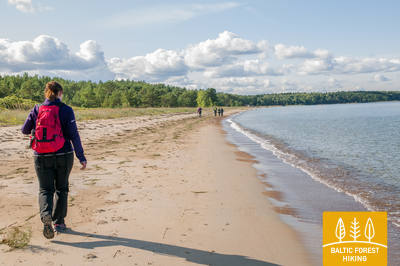
Пристань у поселка Тситре появилась еще во времена викингов. Первые 4 км этого этапа Лесной тропы проходят по территории Национального парка Лахемаа. Путь между поселками Муукси и Сооринна проходит по платообразному овальному холму (возвышению Северо-Эстонского глинта), покрытому живописными зарослями можжевельника. Возле поселка Пыхья (Põhja) тропа пересекает прибрежную заболоченную местность, минует лодочную пристань в Салмисту и выходит к берегу моря. Отсюда хорошо виден остров Педассар (Pedassaar), расположенный на расстоянии 1,3 км в северо-восточном направлении. С этой точки можно рассмотреть также острова Умблу и Рохуси. Возле Валкла путники смогут посетить уютный пляжный ресторан. На пляже в Хаапсе оборудовано место для купания, где резко становится глубоко.
Tsitre Tree Trail
Тропа протяженностью 1 км знакомит посетителей с историей и биоразнообразием парка летней усадьбы Цитре и его окрестностей. Она оборудована 29 информационными пунктами. Примерно 150 метров тропы состоят из дощатых настилов шириной до 1 метра, которые доступны для людей в инвалидных колясках. Есть адаптированный туалет. Тропа начинается от парковки (GPS: 59.518268, 25.510726). Она расположена недалеко от Лесной тропы.
49. Etappe. Muuga – Püünsi.
Viimsi – eine Halbinsel mit vielen Facetten
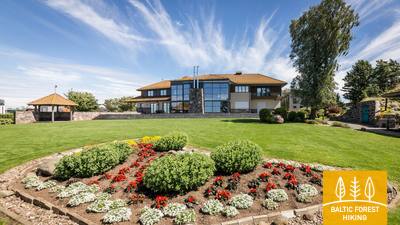
Лесная тропа проходит через самую лесистую часть полуострова Виймси, где было создано несколько охраняемых природных территорий. В окрестностях Рохунеэме (Rohuneeme) тропа пересекает бывшую военную территорию советского периода. В этот день Лесная тропа ведет главным образом по тротуарам и вдоль дорог, пересекающих полуостров. В поселке Пююнси тропа поворачивает на юг. Отсюда можно видеть башни Старого города, высотные здания Таллинна возвышающиеся над водами Таллиннского залива, и порт с паромными маршрутами между Таллинном и Хельсинки.
Tedu (Tädu) Nature Trail.
Тропа протяженностью 3,1 км знакомит посетителей с традициями лесного хозяйства. Вся поверхность тропы гравийная и доступна для людей в инвалидных колясках. Есть парковка (GPS: 59.520475, 24.895883). Она расположена недалеко от Лесной тропы.


50. Etappe. Püünsi – Tallinn.
Postkartenblicke auf Tallinn
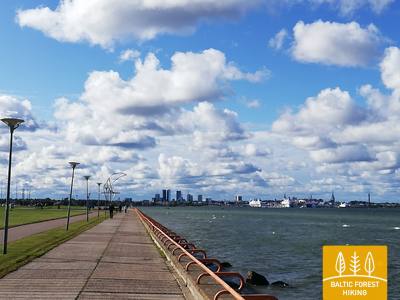
Лесная тропа проходит вдоль побережья Таллиннского залива, где в Пююнси открывается вид на башни Старого города, высотные здания и порт Таллинна. Приближаясь к Пирита (Pirita), Лесная тропа уводит в очаровательный сосновый лес, затем 2 километра по песчаному морскому пляжу. Путь от Пирита до Таллинна пролегает по прекрасному городскому променаду, откуда открываются виды на море и порт, а также культурно-исторические объекты. Лесная тропа завершает свой путь в Таллиннском порту, рядом с которым находится Старый город. На осмотр Старого города следует отвести один или два дня.
Pirita Promenade
Около 3 км длиной, ухоженный променад соединяет портовую зону Таллина с Пирита, пролегая вдоль морского побережья. Он имеет поверхность, подходящую для велосипедистов и любителей активного отдыха, и доступен для людей в инвалидных колясках на всем протяжении. На пляже Пирита есть плавательные средства, раздевалки и деревянный пандус, обеспечивающий доступ к воде. Услуги необходимо заказывать заранее: +372 5425 0424. Променад Пирита совпадает с Лесной тропой.


59. Etappe. Panemunis – Birštonas.
Bögen von Nemunas und ethnografische Gehöfte
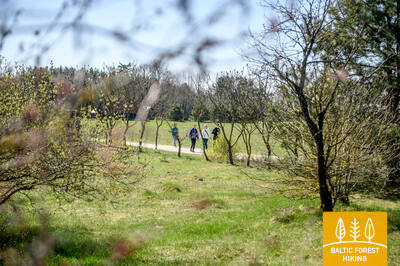
Повторяя излучины реки Неман, Лесная тропа на территории Регионального парка излучин Немана образует изгиб длиной более 20 км, петляя по красивейшим природным уголкам и небольшим деревням с характерными для данной местности деревянными постройками, выкрашенными в разные цвета. Единственный на данном этапе крупный лесной массив, в котором маршрут пролегает по небольшим лесным дорожкам, расположен между деревнями Сипонис и Пузонис. После пересечения шоссе Вильнюс–Мариямполе (A16), Лесная тропа выходит к следующей излучине реки Неман, где располагается бальнеологический курорт Бирштонас. По улице Б. Сруогос тропа приводит к туристическому информационному центру Бирштонаса.
Birštonas Nemunas krasta promenāde un gājēju celiņš
За Бирштонским туристическим информационным центром тропа Межтака тянется более 1 км вдоль набережной реки Нямунас. Затем она поворачивает на улицу Альгирдо, пересекает парк Витаутаса Юргиса Мешки, возвращается на променад и через 0,6 км переходит в пешеходную и велосипедную дорожку. Тропа длиной около 5 км пересекает лес Жверинчюс, затем пешеходная тропа проходит через зону отдыха Паприене, доходя до моста Грейму через реку Нямунас. Променад и пешеходная дорожка доступны для людей в инвалидных колясках почти на всем протяжении. Покрытие в основном асфальтовое, а в Пренае — гравийное. Тропа совпадает с маршрутом Межтака.
83. Etappe. Paplatelė – Plateliai.
Rund um die größten Seen im Nationalpark Žemaitija
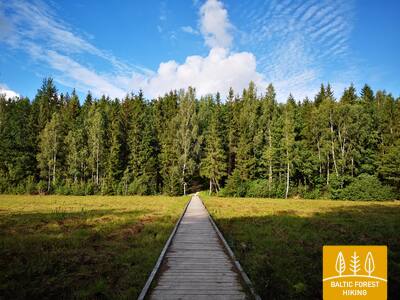
Первые 3,5 км Лесная тропа ведёт через красивейшие хвойные леса. До Музея холодной войны тропа совпадает с познавательной тропой Плокштине, а 5 км от музея – с пешеходной и велосипедной дорожкой Плокштине. У шоссе № 3202 (улица Малуно) маршрут сворачивает налево на юго-запад и сразу, через 0,3 км, направо на юго-юго-запад. Приблизительно через 0,5 км выходит на улицу Ильгё эжеро. Затем на протяжении 5,5 км маршрут делает широкий круг вокруг озёр Ильгис и Бержорас, пока не выведет к деревне Бержорас. Через 2 км по улице Плунге Лесная тропа приводит в центр Плателяй и делает ещё один круг по улице Эжеро до познавательной тропы Шейре, открывая живописный ландшафт. Далее по улицам Эжеро, Науёйи и Жямайчю Калвариёс возвращается в центр города.
Šeire's Educational Trail
Длина тропы составляет около 7 километров, но есть смотровая площадка, доступная для людей в инвалидных колясках, с которой открывается вид на озеро Плателяй и его острова. Плателяй находится в Национальном парке Жемайтия. На информационном щите размещена тактильная карта озера с островами, что позволяет людям с нарушениями зрения исследовать его. Парковка находится здесь: GPS 56.048355, 21.826901. Она расположена рядом с тропой Межтака.


84. Etappe. Plateliai – Salantai.
Auf dem Weg zur Küstenebene
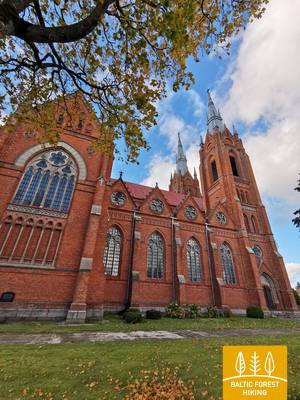
Лесная тропа на протяжении 6 км проходит по бровке шоссе Плателяй–Салантай (№ 2302). На этом этапе маршрут спускается вниз по западной части Жемайтской возвышенности. Во время путешествия в направлении Приморской низменности открывается красивейшая панорама ландшафта. В центре деревни Гинталишке Лесная тропа уходит налево на юго-запад и 2,4 км петляет по шоссе № 3216, затем сворачивает направо на запад, где пересекает крупнейший на этом этапе лесной массив. В советские времена здесь находилась ракетная база, что доказывает выложенная бетонными плитами дорога. Затем маршрут совпадает с шоссе Плунге–Салантай (№ 169) и через 1,4 км уходит влево. До города Салантай тропа петляет по небольшой дорожке, а к центру города ведёт по улицам Жемайтес и М. Валанчяус. Начало маршрута – Жемайтийский национальный парк, окончание – Салантайский региональный парк.
Šeire's Educational Trail
Длина тропы составляет около 7 километров, но есть смотровая площадка, доступная для людей в инвалидных колясках, с которой открывается вид на озеро Плателяй и его острова. Плателяй находится в Национальном парке Жемайтия. На информационном щите размещена тактильная карта озера с островами, что позволяет людям с нарушениями зрения исследовать его. Парковка находится здесь: GPS 56.048355, 21.826901. Она расположена рядом с тропой Межтака.
85. Etappe. Salantai – Mosėdis.
Durch den Regionalpark Salantai
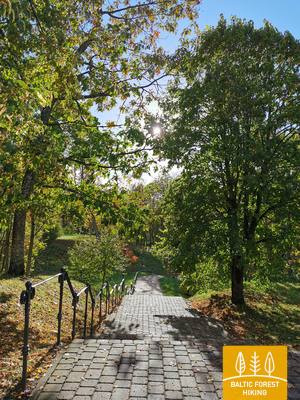
Из городка Салантай Лесная тропа выбирается по улицам М. Валанчяус, Падваралё и Илгая. За 100 м до шоссе № 169 маршрут уходит влево на сельскую дорожку и через 3,5 км достигает улицы Эрлос, где сворачивает налево на запад. Ещё через 0,4 км уходит вправо на север и выводит в деревню Шатраминяй, где поворачивает направо на юго-запад, через 2,9 км пересекает шоссе Салантай–Скуодас (№ 169) и в Шаукляй уходит влево на север. Через 3,8 км достигает конечной точки данного этапа – Моседиса. Большая часть этапа, кроме участка в окрестностях Шатраминяй, пролегает по территории Салантайского регионального парка.
The Šauklių Nature Trail
Тропа длиной 2,7 км знакомит с ландшафтом регионального парка Салантай, покрытого валунами и можжевельником, демонстрирующим его биоразнообразие. Поверхность тропы состоит из хорошо протоптанной дорожки и дощатых настилов. Часть дощатого настила доступна для людей в инвалидных колясках. Посетителям необходимо заранее сообщить об этом руководству парка, чтобы ворота можно было открыть. Парковка находится здесь: GPS 56.125202, 21.592115, и в 1,2 км от тропы Межтака.

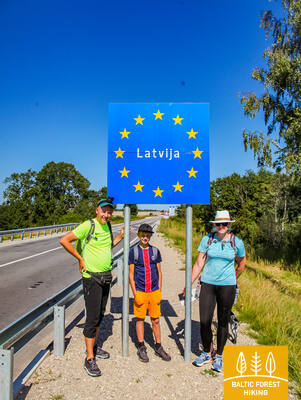
87. Etappe. Litauische-lettische Grenze – Gramzda.
Entlang der hügeligen Ebene von Vārtāja
Литовско-латвийская государственная граница проходит по руслу реки Апша, которую по мосту трассы Скуодас – Приекуле (P114) пересекает тропа Лесного маршрута. Сначала он петляет обочиной дороги и через 1,7 км сворачивает на гравийную дорогу в направлении Калети. Из окрестностей дер. Озоли открывается вид западной части Куршских холмов - широких и красивых волнистых равнин Вартайи. Этап маршрута в 0,5 км идёт дорогой V1217 через деревню Озолы, далее сворачивает вправо и через 2 км достигает дороги Барта – Калети – Грамзда (V1218). Далее маршрут ведёт к Грамзде.
Gramzdas mežaparka taka
В лесопарке Грамзда проложена тропа длиной около 2 километров. Она не размечена, а ее поверхность состоит из гравия, асфальта и простых протоптанных дорожек. Тропа частично доступна для людей в инвалидных колясках и родителей с детскими колясками. Удобной отправной точкой является парковка возле магазина «Aibe» (GPS: 56.369134, 21.604151). В здании администрации волости Грамзда есть адаптированный туалет. Тропа Межтака проходит через лесопарк Грамзда.


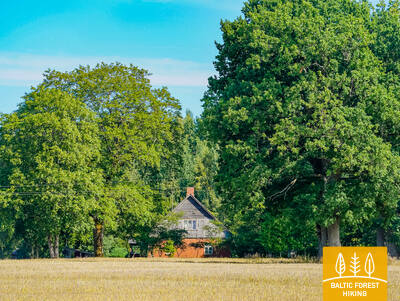
88. Etappe. Gramzda – Priekule.
Nach Priekule, die reich an Überlieferungen ist
От Грамзды Лесная тропа маленькими тропками петляет вдоль карьеров песка и гравия, проходит в северо-восточном направлении через фермерские поля. Возле усадьбы «Lejasbunči» («Леясбунчи – Нижний Бунчи») маршрут сворачивает к Мазграмзде и перед самым местечком пересекает глубокую и прохладную долину речки Рунюпе. За Мазграмздой маршрут пролегает вдоль трассы Грамзда – Приекуле (P114), от которой открывается вид волнистых равнин Вартаи в западной части широкой красивой Куршской возвышенности. После пересечения этой трассы, маршрут лесной тропы проходит через бывший аэродром, дорогой Приекуле - Пурмсати - Калейи (V1211) и небольшой дугой через лесок. Извилистым берегом речки Вирга лесная тропа, следуя через лесопарк «Priekules Priediens» («Приекулес Приеденс – Сосны Приекуле»), приводит к Лютеранской церкви в Приекуле.
Gramzdas mežaparka taka
В лесопарке Грамзда проложена тропа длиной около 2 километров. Она не размечена, а ее поверхность состоит из гравия, асфальта и простых протоптанных дорожек. Тропа частично доступна для людей в инвалидных колясках и родителей с детскими колясками. Удобной отправной точкой является парковка возле магазина «Aibe» (GPS: 56.369134, 21.604151). В здании администрации волости Грамзда есть адаптированный туалет. Тропа Межтака проходит через лесопарк Грамзда.
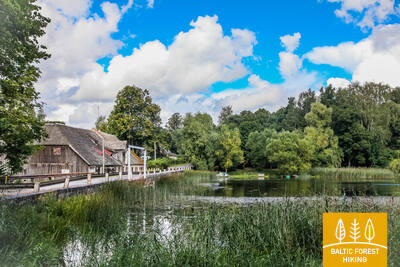
91. Etappe. Aizpute – Snēpele.
Auf den Spuren des Barons von Manteuffel
Маршрут Лесной тропы улочками Атмодас и Елгава проходит через Айзпуте, за прудом Лажа сворачивает вправо и большой дугой приближается к парку поместья Казданга с южной стороны. Маленькими тропками вдоль озера Дзирнаву ведёт по парку вокруг строений поместья и пруда Зену, 0,7 км проходит дорогой Казданга - Цилду (V1200) и сворачивает вправо на дорогу Снепеле – Казданга (V1296). К усадьбе «Земтури» лесная тропа понемногу поднимается на Бандавские холмы Западно – Куршской возвышенности, откуда открывается красивейший вид окрестностей. Это место находится на высоте 81 м над уровнем моря. От усадьбы 12 км маршрута пролегают через малонаселённые лесистые места, и лишь последние 3 км выводят на открытую местность и фермерские земли, пока не дойдут до Снепеле.
Kazdangas parka dabas takas
Парк Казданга является одним из самых богатых латвийских усадебных парков с точки зрения дендрологического разнообразия. Парк отличается густой сетью троп, простирающейся до 9 километров. Покрытие троп включает гравий, хорошо утоптанные дорожки и деревянные настилы. Указатели направляют посетителей к различным достопримечательностям. В качестве отправной точки для исследования парка была создана парковка (GPS: 56.732242, 21.733626). Тропы парка доступны для людей в инвалидных колясках с помощью помощника, а также удобны для родителей с детскими колясками. Доступен адаптированный туалет. Тропа Межтака проходит через парк Казданга.


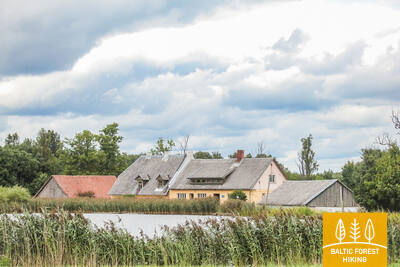
92. Etappe. Snēpele – Kuldīga.
Nach Kuldīga – die charmanteste mittelalterliche Stadt von Kurland
Лесная тропа ведёт по главной улице Снепеле к дороге V1294 и через 0,3 км перед озером Кепшу сворачивает вправо на деревенскую дорогу. По этой дороге маршрут достигает Слипинциемса, перед этим пересекая плотину Спринцупе, и проходит вдоль пруда. Далее маршрут поворачивает по направлению к Пелчи, где петляет вдоль Дамбовых прудов, ведет к дороге Кулдига – Пелчи (V1293) и продолжается через сады Кулдиги «Курземите» и «Румба», до реки Вента и Кулдигской объездной дороги. Этап маршрута длиной 2,4 км от объездной дороги до Старинного кирпичного моста ведёт по красивой прибрежной тропе реки Венты, где во влажных местах и через ручьи проложены деревянные мостки.
The walking trail along the Venta River in Kuldīga
Тропа тянется вдоль левого берега реки Вента от городского сада Кулдиги до нового моста Кулдиги, охватывая 2,4 километра. Вдоль тропы установлены места для отдыха и информационные щиты. Тропа доступна для людей в инвалидных колясках благодаря своей гладкой поверхности, состоящей из мелкого твердого гравия, хотя на некоторых участках может потребоваться помощь из-за уклонов. Тропа широкая, и там, где она пересекает небольшие овраги ручьев, построены деревянные настилы и мосты. Этот участок тропы Межтака проходит вдоль тропы променада Кулдиги. Доступны адаптированные туалеты. Оборудована парковка по координатам GPS: 56.973354, 21.977798.


The Mārtiņsala Nature Trail
Ap kilometru garā taka atrodas t.s. Mārtiņsalā un iepazīstina ar Ventas rumbu. Segums: grants šķembas (1.60 m plata taka) vai dēļu laipa (95 cm) bez samainīšanās laukumiem. Atsevišķi tās posmi ir pieejami cilvēkiem ratiņkrēslā. Ir pielāgotas wc. Autostāvlaukums: 56.970622, 21.980747. Mārtiņsalas dabas taka atrodas blakus Mežtakai.


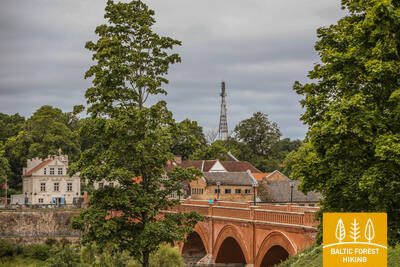
93. Etappe. Kuldīga – Renda.
Venta-Tal und Naturpark Riežupe
Aiz Senā ķieģeļu tilta pāri Ventai Mežtaka īsu brīdi turpinās pa gravām izroboto Ventas labo krastu, virzās pa Krasta ielu un Vetklīnikas–Palejas ceļu, šķērso Kalnmuižas mežu, Riežupi un tālāk līdz pat Mazrendai turpinās pa plašā Rendas mežu masīva ceļiem. Reljefs šeit ir līdzens, jo posms ietilpst Kursas zemienes Pieventas līdzenumā. Mazrendā Mežtaka šķērso smilšu-grants karjeru un pa Kuldīgas ielu aizved līdz Rendas centram. Posms ietilpst dabas lieguma “Ventas ieleja” un dabas parka “Riežupe” teritorijā.
The Mārtiņsala Nature Trail
Ap kilometru garā taka atrodas t.s. Mārtiņsalā un iepazīstina ar Ventas rumbu. Segums: grants šķembas (1.60 m plata taka) vai dēļu laipa (95 cm) bez samainīšanās laukumiem. Atsevišķi tās posmi ir pieejami cilvēkiem ratiņkrēslā. Ir pielāgotas wc. Autostāvlaukums: 56.970622, 21.980747. Mārtiņsalas dabas taka atrodas blakus Mežtakai.
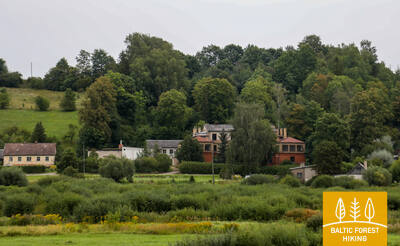
95. Etappe. Sabile – Kandava.
Einer der schönsten Naturparks in Kurzeme
Mežtaka turpinās pa Abavas kreiso krastu – Kr. Barona ielu. Tālāk kā maza taciņa tā šķērso Abavas senlejas pļavas un mežu pudurus, līdz sasniedz pakalnu, ko sauc par Zviedru cepuri. Aiz Zviedru cepures pa mazu lauku ceļu Mežtaka virzās līdz Plostu–Pūces ceļam (V1471), šķērso Amulu un pie Kalnmuižas uzvijas augšup Abavas senlejā, pa kuru nākamos 6 km ved līdz Aizdzires muižas parkam. Vēl 1 km ziemeļu virzienā, un Mežtaka šķērso Abavas senleju visā platumā, atklādama vienus no skaistākajiem senlejas skatiem. Abavas senlejas dziļums šajā vietā ir ap 40 m. Aiz Zvejnieku tilta Mežtaka paceļas senlejas ziemeļu nogāzē, kur sastādīti vīnogu dārzi. Izlīkumojot cauri mežam, tā šķērso Kandavas–Rendas ceļu (P130) un tālāk pa Sabiles ielu sasniedz Kandavu. Pa šīs ainaviskās mazpilsētas Lauku, Ozolu, Zīļu, Sabiles un Pils ielām Mežtaka nonāk līdz Bruņinieku pilskalnam. Visā posma garumā Mežtaka vijas cauri dabas parkam “Abavas senleja”.
The "Fairy Tale Forest" play trail
Pie kafejnīcas "Plostkrogs" (GPS: 57.020908, 22.645401) ir izveidota speļu taka "Pasaku mežs", kurā bērniem izveidotas dažādas mežu iemītnieku figūras, koka mājiņas u.c. spēles. Takas garums - 1,6 km. Ir daži šķēršļi - koku saknes, ieeja caur koka namiņu, taču asistenta pavadībā cilvēki ratiņkrēslā var iepazīt "Pasaku mežu". Atrodas 1,2 km attālumā no Mežtakas.
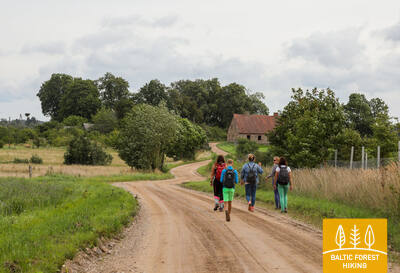
96. Etappe. Kandava – Jaunmokas.
Pūre – der Ort, wo Schokolade hergestellt wird
Pa Jelgavas ielu, šķērsodama veco laukakmens tiltu pār Abavu, Mežtaka pa Daigones ielu un tālāk pa grants seguma ceļu aizved līdz 5 km attālajam Daigones ciemam, aiz kura pa Dziļkalnu–Pūres ceļu (V1464) nolaižas Abavas senlejā. Aiz tilta pār Abavu Mežtaka pagriežas pa labi un pa mazu taciņu sasniedz Pūri. Apmetusi loku Pūres muižai, tā pa Zemeņu ielu un Pūres–Jaunsātu (C004) ceļu nākamos 5 km aizstiepjas līdz Galciemam. Šeit apkaimes karjeros iegūst smiltis un granti. Galciemā Mežtaka nogriežas pa kreisi uz neliela grants seguma ceļa (C003), kas pēc 3,5 km savienojas ar Jaunmoku–Jaunsātu ceļu (V1444). Vēl pēc 3 km Mežtaka šķērso Rīgas–Ventspils šoseju un pa maziem, koku aleju ieskautiem celiņiem sasniedz Jaunmoku pili. Tuvojoties pilij no Jaunsātu puses, ap Mežtaku ir redzamas skaistas, plašas ainavas, kur Austrumkursas Spārnenes viļņotais līdzenums mijas ar Vanemas pauguraini.
Čužu Marsh Nature Trail
Lokveida taka Čužu purvā iepazīstina ar vienīgo krūmu čužas savvaļas atradni, kaļkainu purvu un bijušo sēravotu kūrorts. Cilvēkiem ratiņkrēslā pielāgots apmēram kilometru garš koka laipu posms ar apmalīti. Laipas ar speciāli izveidotu autostāvlaukumu (GPS: 57.026431, 22.785473) un pielāgotām WC savieno šķembām klāts ceļš ap 0,5 km garumā. Dažviet esošā slīpuma dēļ nepieciešams asistents. Atrodas ap 0,8 km attālumā no Mežtakas.


Jaunmoku Castle Trail
Iepazīstina ar muižas kompleksu un parku aptuveni 1,5 km garumā. Pieejama cilvēkiem ar ratiņkrēslu. Takas segums - asfalts, bruģis, grants šķembas. Autostāvlaukuma GPS: 56.982423, 23.053098. Ar zvana pogas palīdzību var izsaukt pils darbiniekus, as palīdzēs nokļūt ēkā un apskatīt to no iekšpuses. Atrodas blakus Mežtakai. Ir pielāgotas WC.


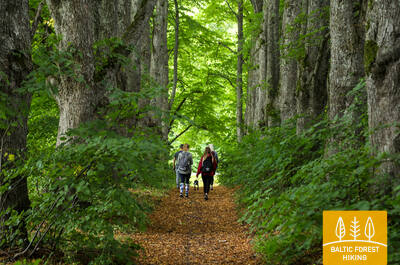
97. Etappe. Jaunmokas – Tukums.
Nach Tukums der Schönheit wegen!
Jaunmoku pils apkaimē priecē Austrumkursas augstienes Vanemas pauguraines skaistās ainavas. Mežtaka nolīkumo lejup līdz Bēru ūdensdzirnavām un tālāk līdz pat Vecmokām trīs kilometru garumā paceļas par aptuveni 50 m, atklādama skaistas ainavas uz plašo Slocenes ieleju dienvidos. Aiz Vecmoku muižas alejas Mežtaka šķērso Tukuma–Lazdas ceļu (V1442), apmet loku viensētu pudurim un pa taisnu meža stigu dodas dienvidaustrumu virzienā gar Sekļa ezeru. Ezeram var piekļūt pa mazām taciņām. "Sveikuļu" apkaimē maršruts turpinās pa skaistām meža takām un pie Ozoliņu kapiem iznāk uz Tukuma–Ķesterciema–Kolkas ceļa (P131), kur sākas Tukuma pilsēta. Pa Raudas, Kurzemes, Meža un Melnezera ielām Mežtaka sasniedz Saules kalnu.
Jaunmoku Castle Trail
Iepazīstina ar muižas kompleksu un parku aptuveni 1,5 km garumā. Pieejama cilvēkiem ar ratiņkrēslu. Takas segums - asfalts, bruģis, grants šķembas. Autostāvlaukuma GPS: 56.982423, 23.053098. Ar zvana pogas palīdzību var izsaukt pils darbiniekus, as palīdzēs nokļūt ēkā un apskatīt to no iekšpuses. Atrodas blakus Mežtakai. Ir pielāgotas WC.
99. Etappe. Jāņukrogs – Bigauņciems.
Durch den Nationalpark Ķemeri
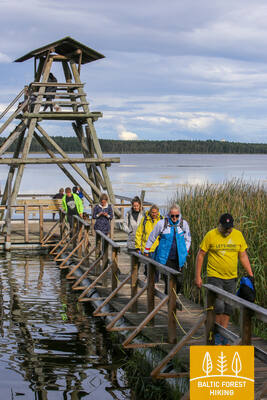
Nachdem er das Gebiet mit einigen Gehöften durchquert hat, schlängelt sich der Wald-Wanderweg durch schöne Nadelwälder und führt weitere 6,5 km entlang dem Dorf Čaukciems bis zur Abzweigung zur Grünen Düne entlang der Landstraße Antiņciems – Smārde. Die Umgebung ist flach, weil dieser Abschnitt zur Engure-Ebene des Piejūra-Tieflandes gehört. Die Grüne Düne bietet einen weiten Blick auf die Zaļais- und Raganu Moore. Der kleine Forstweg biegt am unteren Teil der Düne ab und überquert über Holzstege an zwei Stellen das Moor. In Ķemeri verläuft der Wald-Wanderweg an den Straßen Partizānu, Robežu, A. Upīša, Katedrāles und E. Dārziņa entlang dem Waldhaus (Meža māja) und dem Fluss Vēršupīte, in die schwefelhaltiges Quellwasser mündet. Über die Tūristu-Straße geht es weiter über den Dūņu-Weg bis zum Sloka-See. Weiter durchquert der Wald-Wanderweg die Vēršupīte-Sümpfe, die einen der herausragendsten Feuchtwaldlebensräume im gesamten kurländischen Teil des Wald-Wanderweges darstellen. Am See Melnezers biegt der Weg auf die Alte Ķemeri-Straße ab und erreicht nach 2 km Bigauņciems. Hinter der Talsi-Schnellstraße (P128) erreicht der Wald-Wanderweg die Küste des Rigaer Meerbusens und verbindet sich mit dem See-Wanderweg. Der Wald-Wanderweg führt entlang des gesamten Abschnitts durch den Ķemeri-Nationalpark (ĶNP).
The Melnalkšņu Swamp Boardwalk
Der Weg befindet sich in der Nähe des Besucherzentrums des Ķemeru-Nationalparks und führt die Besucher in einen der charakteristischen Lebensräume des Parks ein: die Feuchtwälder. Der 0,6 Kilometer lange Promenadenweg ist auf Holzpfählen erhöht und überquert einen Sumpf, der im Frühjahr überschwemmt wird. Der Promenadenweg ist 1,2 Meter breit und weist keine Ausweichstellen auf. Daher ist es wichtig, der angegebenen Laufrichtung zu folgen. Er ist für Rollstuhlfahrer mit Hilfe zugänglich. Am Anfang und Ende des Weges besteht die Oberfläche aus Schotter und Asphalt. Eine behindertengerechte Toilette ist vorhanden und der Parkplatz befindet sich bei GPS: 56.951980, 23.512914. Der Weg befindet sich in der Nähe des Mežtaka-Weges und wird nach dem Sturm im Sommer 2024 restauriert.


100. Etappe. Bigauņciems – Dubulti.
Der historische Kurort Jūrmala
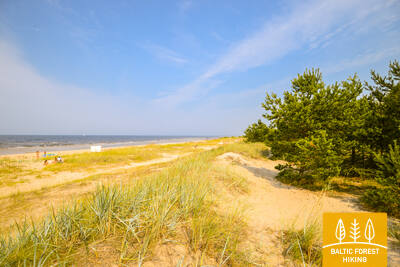
Von Bigauņciema eröffnet sich ein weiter Ausblick über die ganze Küste von Jūrmala. Das erste Drittel dieses Streckenabschnitts führt durch den Nationalpark Ķemeri. Dort kann man sich mit historischen Fischerdörfern, der ehemaligen Fischerbootsanlegestelle und dem Fischmarkt in Ragaciems sowie den Dünenbiotopen vertraut machen. Auch kann man Vögel im Mündungsgebiet des Flusses Starpiņupīte beobachten. Von Jaunķemeri bis Dubulti verläuft der Pfad entlang dem breitesten Sandstrand der Rigaer Meeresbucht durch den historischen Kurort der Stadt Jūrmala und die längste Stadt Lettlands. An warmen und schönen Sommertagen muss mit zahlreichen Strandbesuchern gerechnet werden.
Kupskalni Nature Trail
Der Weg erstreckt sich einen halben Kilometer am rechten Ufer des Flusses Siliņupe entlang und führt von der Straße Sloka-Talsi zum Meer. Er ist teilweise für Rollstuhlfahrer mit Hilfe zugänglich, da Baumwurzeln am Anfang des Weges ein Hindernis darstellen können. Der weitere Abschnitt des Weges (breite Promenaden mit Ausweichstellen) ist zugänglich. Teilweise sind Toiletten zugänglich. Die Wanderung kann von einer nahe gelegenen Tankstelle aus begonnen werden (GPS: 56.992203, 23.522736).


Jūrmalas pilsētas pludmales
Die Stadtstrände von Jurmala sind für Menschen mit funktionellen Beeinträchtigungen zugänglich, darunter auch für Rollstuhlfahrer und Senioren. In Jūrmala gibt es 14 angepasste Zugangspunkte zum Meer für Rollstuhlfahrer: Linie 36, Vienības prospekts (2 Zugangspunkte), Turaidas iela (2 Zugangspunkte), Pilsonu iela, Baznīcas iela, Kļavu iela, Līgatnes iela, Dzimtenes iela, Vēju iela, Atbalss iela, Kapteiņa Zolta iela und Jaunķemeri-Straße. Diese Zugangspunkte sind unter Berücksichtigung des Untergrunds und des Geländes so konzipiert, dass sie sowohl für Personen mit Funktionseinschränkungen als auch für Personen mit Kinderwagen geeignet sind. Darüber hinaus stehen an vier Standorten – Vaivari, Kaugguri, Jaunķemeri und Jaundubulti – erweiterte und komfortablere Umkleidekabinen zur Verfügung.
101. Etappe. Dubulti - Lielupe - Bulduri.
Die beliebtesten Strände Lettlands
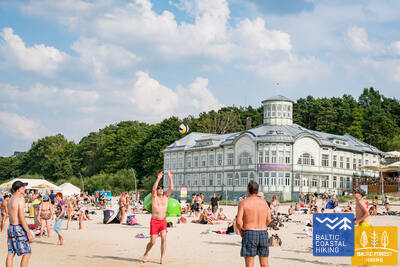
Zwischen Dubulti und Lielupe erstreckt sich der breiteste Sandstrand der Rigaer Meeresbucht – es ist der wertvollste Schatz des Kurorts Jūrmala, in dem es zahlreiche Strandcafés und verschiedene Erholungsmöglichkeiten gibt, Die Wälder der Küstendünen sind von einem dichten Wegenetz durchzogen, das zum Joggen und Wandern geeignet ist. Der Baltische Küstenwanderweg führt zwischen dem Strand Lielupe und dem Freilichtmuseum Jūrmala durch den Naturpark Ragakāpa. Am bequemsten zurück nach Bulduri gelangt man über die Straßen Bulduru prospekts und 5. līnija.
Jūrmalas pilsētas pludmales
Die Stadtstrände von Jurmala sind für Menschen mit funktionellen Beeinträchtigungen zugänglich, darunter auch für Rollstuhlfahrer und Senioren. In Jūrmala gibt es 14 angepasste Zugangspunkte zum Meer für Rollstuhlfahrer: Linie 36, Vienības prospekts (2 Zugangspunkte), Turaidas iela (2 Zugangspunkte), Pilsonu iela, Baznīcas iela, Kļavu iela, Līgatnes iela, Dzimtenes iela, Vēju iela, Atbalss iela, Kapteiņa Zolta iela und Jaunķemeri-Straße. Diese Zugangspunkte sind unter Berücksichtigung des Untergrunds und des Geländes so konzipiert, dass sie sowohl für Personen mit Funktionseinschränkungen als auch für Personen mit Kinderwagen geeignet sind. Darüber hinaus stehen an vier Standorten – Vaivari, Kaugguri, Jaunķemeri und Jaundubulti – erweiterte und komfortablere Umkleidekabinen zur Verfügung.
102. Etappe. Bulduri - Stadtzentrum Rīga.
Durch Wälder nach Rīga
Diese Route ist eine gute Alternative, wie man Rīga von Jūrmala her über einen Waldweg erreichen kann. Hinter der Brücke Lielupe schlängelt sich der Pfad Jūrtaka durch Priedaine und offenbart den Blick auf die herrliche Holzbebauung der Ortschaft. Der Pfad verläuft dem rechten Ufer des Flusses Lielupe entlang und biegt südlich der Düne Bolderāja ab. Dann führt der Pfad durch den Wald Kleisti in Richtung des Friedhofes Lāčupe. Weiter verläuft der Pfad über die historischen Landstraßen des Stadtteils Pārdaugava nach Dzegužkalns, dem Zunda-Kanal und der Bucht Āgenskalns entlang bis zur Daugava. Dort überquert er die Akmens tilts (Steinbrücke) und erreicht den Rathausplatz der Stadt Rīga.
Babīte Rhododendron Nursery
Es wurde ein 1,9 Kilometer langer Pfad angelegt, der für Rollstuhlfahrer und Eltern mit Kinderwagen zugänglich ist. Die Oberfläche des Pfades ist asphaltiert. Es gibt einen ausgewiesenen Parkplatz (GPS: 56.962330, 23.952280) und eine behindertengerechte Toilette. Der Pfad liegt etwa 2,7 Kilometer vom Jūrtaka-Pfad entfernt.
Daugavgrīva Nature Trail
Der Weg beginnt am Parkplatz (GPS: 57.036769, 24.018166) in der Nähe der Valentīna Pikuļa-Straße und führt über das Daugavgrīva-Sumpfgebiet zu den Dünen und zum Meer. Der Weg ist in Meeresnähe asphaltiert und der asphaltierte Abschnitt ist für Rollstuhlfahrer zugänglich. Entlang des Weges wurde ein Vogelbeobachtungsturm errichtet, dessen erste Etage für Rollstuhlfahrer zugänglich ist. Der Weg ist etwa 12,5 Kilometer vom Jūrtaka-Weg entfernt, der an der Meeresküste in Daugavgrīva liegt.

Jūrmalas pilsētas pludmales
Die Stadtstrände von Jurmala sind für Menschen mit funktionellen Beeinträchtigungen zugänglich, darunter auch für Rollstuhlfahrer und Senioren. In Jūrmala gibt es 14 angepasste Zugangspunkte zum Meer für Rollstuhlfahrer: Linie 36, Vienības prospekts (2 Zugangspunkte), Turaidas iela (2 Zugangspunkte), Pilsonu iela, Baznīcas iela, Kļavu iela, Līgatnes iela, Dzimtenes iela, Vēju iela, Atbalss iela, Kapteiņa Zolta iela und Jaunķemeri-Straße. Diese Zugangspunkte sind unter Berücksichtigung des Untergrunds und des Geländes so konzipiert, dass sie sowohl für Personen mit Funktionseinschränkungen als auch für Personen mit Kinderwagen geeignet sind. Darüber hinaus stehen an vier Standorten – Vaivari, Kaugguri, Jaunķemeri und Jaundubulti – erweiterte und komfortablere Umkleidekabinen zur Verfügung.