Baltischer Küstenwanderweg - Wheelchair accesible

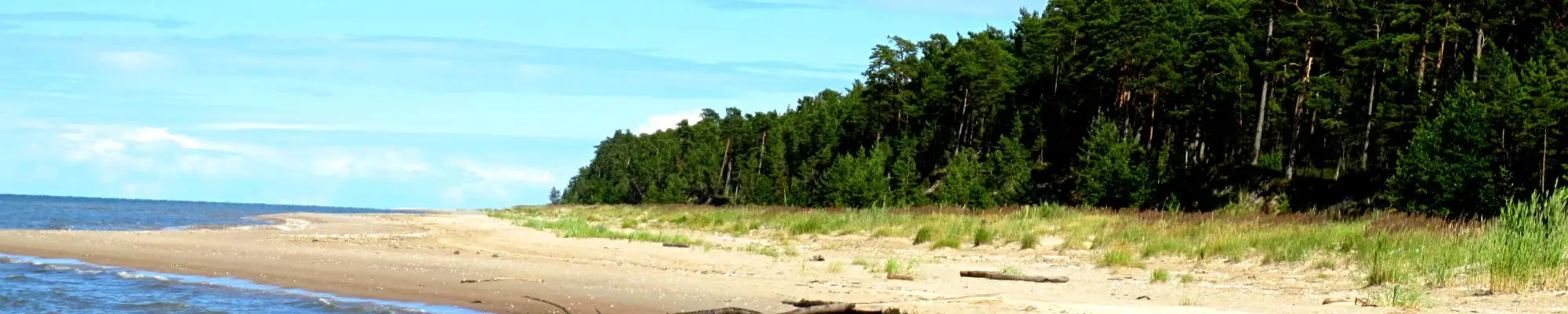
 2. Etappe. Pape - Bernāti.
Der am, westlichsten gelegene Punkt Lettlands
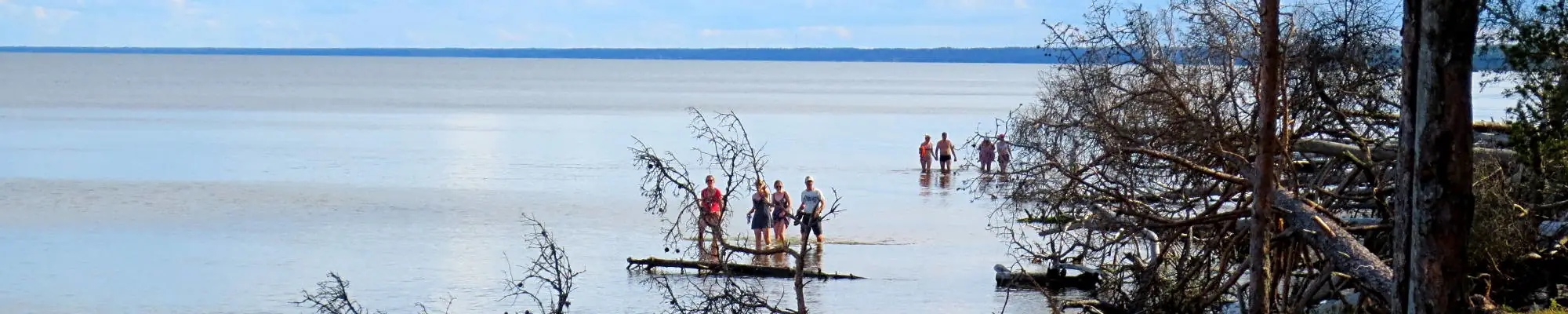
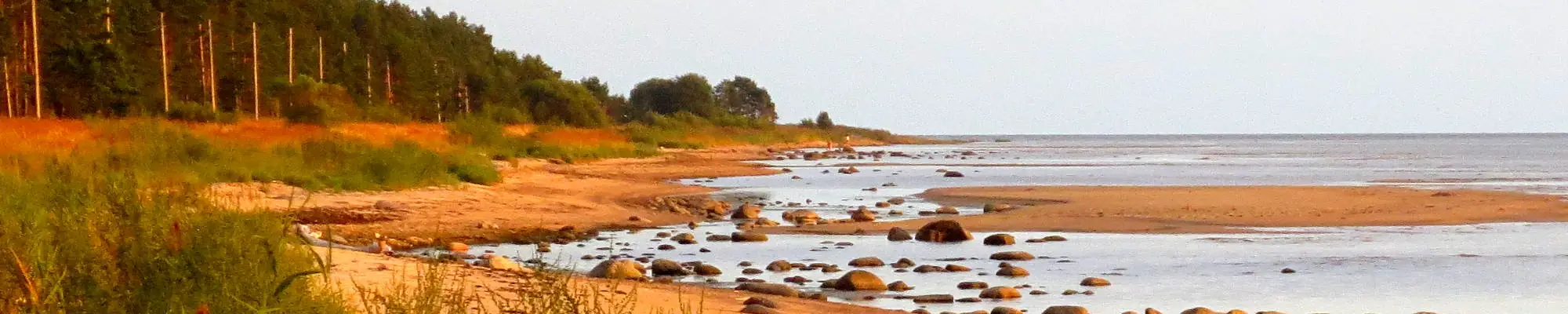
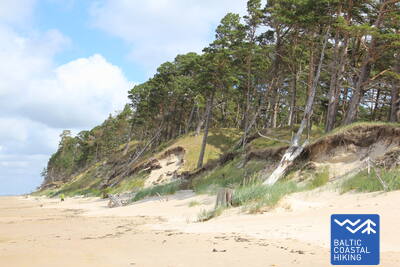
Visoje atkarpoje palei paplūdimį driekiasi Baltijos pajūrio žygių maršrutas. Papės apylinkėse paplūdimio pakrantę supa gražūs prieštakai, o toliau nuo kaimo virsta beveik 10 km nuplautu krantu, skersai tyvuliuojančių nulūžusių pušų. Prie Jūrmalciemo vėl atsiranda švelniai pasvirusios kopos. Pravažiavus Jūrmalciemą tęsiasi platūs uždumblėję paplūdimiai, tačiau priartėjus prie Bernati kyšulio prieš akis iškyla stulbinantis pušynu apaugęs ir retkarčiais nuplaunamas staigus.
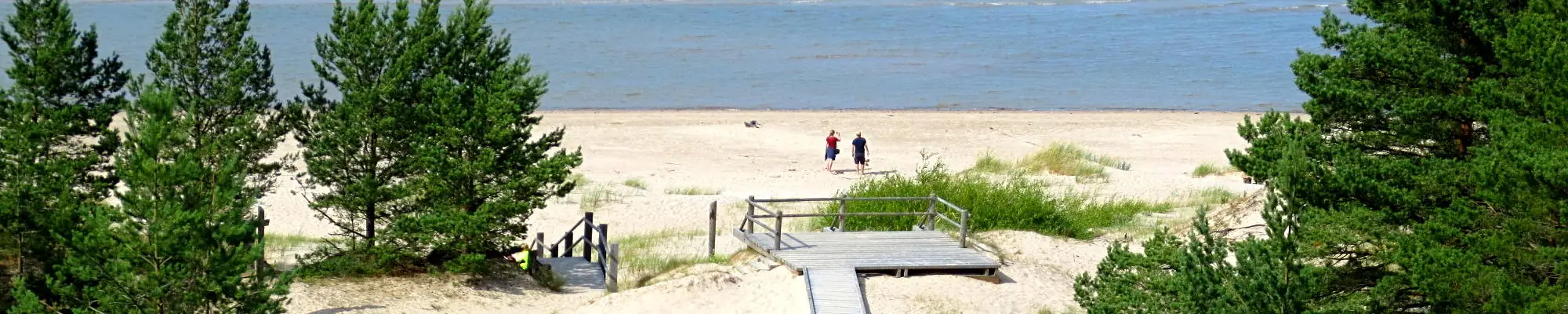
Bernāti Beach Boardwalk
Bernāti paplūdimio lentų takas yra maždaug 400 metrų ilgio viena kryptimi, o plotis nuo 1,2 iki 1,6 metro. Jis iš dalies pritaikytas žmonėms su vežimėliais ir rekomenduojamas su pagalba, nes nuolydžiai siekia iki 12 proc. Taip pat tinka tėvams su vežimėliais. Lentinio tako gale yra apžvalgos aikštelė ir poilsio zona. Sezono metu lentų takas yra pratęsiamas, kad neįgaliųjų vežimėliais galėtų pasiekti krantą. Prie lentinio tako yra automobilių stovėjimo aikštelė (GPS: 56.366156, 20.976715) ir sausas tualetas (nepritaikytas).


2. Etappe. Pape - Bernāti.
Der am, westlichsten gelegene Punkt Lettlands
Visoje atkarpoje palei paplūdimį driekiasi Baltijos pajūrio žygių maršrutas. Papės apylinkėse paplūdimio pakrantę supa gražūs prieštakai, o toliau nuo kaimo virsta beveik 10 km nuplautu krantu, skersai tyvuliuojančių nulūžusių pušų. Prie Jūrmalciemo vėl atsiranda švelniai pasvirusios kopos. Pravažiavus Jūrmalciemą tęsiasi platūs uždumblėję paplūdimiai, tačiau priartėjus prie Bernati kyšulio prieš akis iškyla stulbinantis pušynu apaugęs ir retkarčiais nuplaunamas staigus.
3. Etappe. Bernāti - Liepāja - Karosta.
Die Stadt, wo der Wind geboren ist
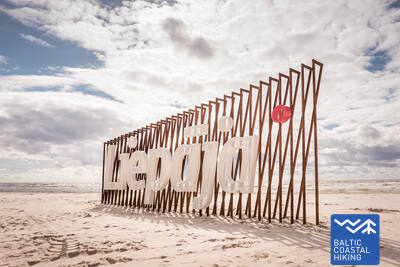
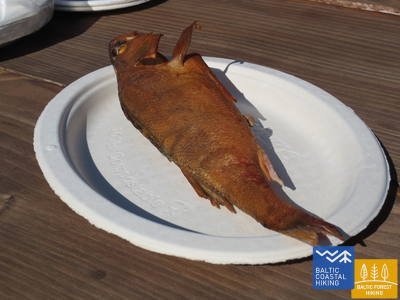
Nuo Bernatų iki Liepojos Baltijos pajūrio pėsčiųjų maršrutas veda plačiu paplūdimiu, kur iš pradžių pakrantę formuoja išplautos krantai, tačiau artėjant prie Liepojos akyse iškyla aukšti priedangos, apaugusios smėlynėmis svidrėmis ir marražolėmis. Vėliau takas vingiuoja per Liepojos senamiestį ir „Naująją Liepoją“, kertant Karinio jūrų laivyno uosto kanalą ir pasiekti Karinių jūrų pajėgų uostą: karinių ir fortifikacinių pastatų kompleksą, kurio apžiūra, tikėtina, užtruks pusę dienos. Neabejotinai turėtumėte paragauti ypatingo Liepojos patiekalo, vadinamo Liepājas menciņi , pagamintą iš rūkytos menkės pagal senovinį Pietų Kuržemės receptą.
The hiking route "Hear, Smell, Touch Liepāja."
Sukurtas akliesiems ir silpnaregiams, maršrutą veda apmokytas aklas gidas. Tai apima apsilankymus svarbiose Liepojos kultūros ir istorijos vietose. Maršruto ilgis priklauso nuo grupės poreikių. Jis yra netoli Pajūrio tako. Liepojoje buvo sukurti keli lytėjimo žemėlapiai, padedantys žmonėms su regos negalia lengviau orientuotis.
Liepāja Beach near the Central Rescue Station
Liepojos paplūdimyje prie centrinės gelbėjimo stoties (GPS: 56.504199, 20.991922) įrengtas neįgaliesiems skirtas objektas. Jame yra dušai, persirengimo kambariai ir mediniai lentiniai takai, besitęsiantys iki jūros, leidžiantys neįgaliųjų vežimėliams pasiekti krantą. Galimi specialūs vežimėliai, tinkami maudytis jūroje. Akliesiems ir silpnaregiams jūroje įrengiami garso plūdurai, kurie signalais informuoja, kiek galima nuplaukti.


Liepāja Seaside Park.
Parke įrengtas maždaug 3 km ilgio takų tinklas, pritaikytas žmonėms su vežimėliais. Tako paviršiai skiriasi, įskaitant žvyrą, grindinį, lentų takus ir asfaltą. Yra poilsio zonos, vietos pavalgyti, automobilių stovėjimo aikštelės ir tualetai. Į parką galima patekti iš Liepų ir Peldu gatvių sankryžos (GPS: 56.506365, 20.997112). Jis yra netoli Pajūrio tako.


Liepāja Lake Boardwalk
Liepojos ežero lentų takas yra prieinamas žmonėms su vežimėliais ir tėvams su vežimėliais. Jis platus ir su briaunomis, besitęsiančiais į vieną pusę apie 400 metrų. Bokštas neprieinamas neįgaliųjų vežimėliams. Jis yra apie 2 km nuo Pajūrio tako, GPS: 56.494511, 21.024515.


Liepāja Lake Horse Island Trail
Liepojos ežero žirgų salos takas yra apie 2 km į vieną pusę. Tako pradžioje yra automobilių stovėjimo aikštelė (GPS: 56.516585, 21.032329) ir Dabasmāja – mokslo ir švietimo inovacijų centras (įrengtas rampas). Tako dangą pradžioje sudaro lentiniai takai, po kurių eina žvyruotas takas. Jį galima pasiekti žmonėms su vežimėliais, nors žvyro ruožas rekomenduojamas su pagalba. Jis yra už 1,3 km nuo Pajūrio tako.


3. Etappe. Bernāti - Liepāja - Karosta.
Die Stadt, wo der Wind geboren ist
Nuo Bernatų iki Liepojos Baltijos pajūrio pėsčiųjų maršrutas veda plačiu paplūdimiu, kur iš pradžių pakrantę formuoja išplautos krantai, tačiau artėjant prie Liepojos akyse iškyla aukšti priedangos, apaugusios smėlynėmis svidrėmis ir marražolėmis. Vėliau takas vingiuoja per Liepojos senamiestį ir „Naująją Liepoją“, kertant Karinio jūrų laivyno uosto kanalą ir pasiekti Karinių jūrų pajėgų uostą: karinių ir fortifikacinių pastatų kompleksą, kurio apžiūra, tikėtina, užtruks pusę dienos. Neabejotinai turėtumėte paragauti ypatingo Liepojos patiekalo, vadinamo Liepājas menciņi , pagamintą iš rūkytos menkės pagal senovinį Pietų Kuržemės receptą.
 5. Etappe. Ziemupe - Pāvilosta.
Der singende Sand und Bernstein
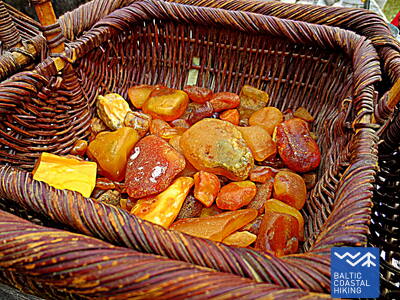
Šiame paplūdimyje retai lankosi žmonės, galima prisirinkti gintaro gabalėlių ir akmenukų su fosilijomis ir išgirsti po kojomis dainuojantį smėlį. Prie Žiemupės iškyla gražūs blefai, bet toliau prie Akmensrago ir Pavilostos yra gražių, retkarčiais nuplautų prietakų, apaugusių smėlinėmis svidrėmis ir marražolėmis. Vietomis matyti pilkos kopos. Akmenrago švyturys bus puiki vieta poilsiui. Pavilosta su savo provincijos žavesiu ir uosto kvapu bei rūkyta žuvimi sugrąžins Jus iš dykumos į civilizaciją.
Pāvilosta Pier Promenade
Maždaug 200 metrų ilgio Pavilostos kurmio promenados atkarpa yra prieinama žmonėms su vežimėliais, o pats kurmis – ne. Tinkamas atspirties taškas – Pavilostos kraštotyros muziejus (GPS: 56.889365, 21.172837). Jis yra šalia Pajūrio tako.


Pāvilosta Beach Boardwalk
Pavilostos paplūdimio lentinis takas lankytojus supažindina su Pilkosios kopos ir pakrantės kopų buveinėmis. Tai 1,2 metro pločio, pusės kilometro ilgio medinis lentų takas (atgal ir atgal). Takas prasideda nuo žvyro. Yra automobilių stovėjimo aikštelė (GPS: 56.892935, 21.185369). Takas yra prieinamas žmonėms su vežimėliais su pagalba, nes yra tam tikrų įkalnių ir nuokalnių. Prieiti prie kranto negalima.


5. Etappe. Ziemupe - Pāvilosta.
Der singende Sand und Bernstein
Šiame paplūdimyje retai lankosi žmonės, galima prisirinkti gintaro gabalėlių ir akmenukų su fosilijomis ir išgirsti po kojomis dainuojantį smėlį. Prie Žiemupės iškyla gražūs blefai, bet toliau prie Akmensrago ir Pavilostos yra gražių, retkarčiais nuplautų prietakų, apaugusių smėlinėmis svidrėmis ir marražolėmis. Vietomis matyti pilkos kopos. Akmenrago švyturys bus puiki vieta poilsiui. Pavilosta su savo provincijos žavesiu ir uosto kvapu bei rūkyta žuvimi sugrąžins Jus iš dykumos į civilizaciją.
 6. Etappe. Pāvilosta - Jūrkalne.
Die hervorragendsten Steilküsten der Ostsee
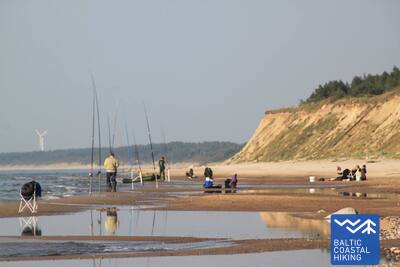
Į šiaurės rytus nuo Pavilostos atsiveria puikūs vaizdai į pilkąsias kopas, o vos už poros kilometrų toliau matosi daugiau nei 20 km besitęsiančio vieno gražiausių Baltijos pajūrio pėsčiųjų maršruto atkarpų pradžia. Įdomiausias blefų peizažas yra netoli Strante ir Ulmale kaimų bei Ryvos upės žiočių. Daug kur vasarą pajūrio nuošliaužų apatinėje dalyje žydi orchidėjos. Jūrkalnėje ir jos apylinkėse matomi „du saulėlydžiai“: pirmasis iš paplūdimio ir antrasis po kelių akimirkų nuo blefo viršūnės.
Pāvilosta Beach Boardwalk
Pavilostos paplūdimio lentinis takas lankytojus supažindina su Pilkosios kopos ir pakrantės kopų buveinėmis. Tai 1,2 metro pločio, pusės kilometro ilgio medinis lentų takas (atgal ir atgal). Takas prasideda nuo žvyro. Yra automobilių stovėjimo aikštelė (GPS: 56.892935, 21.185369). Takas yra prieinamas žmonėms su vežimėliais su pagalba, nes yra tam tikrų įkalnių ir nuokalnių. Prieiti prie kranto negalima.
Pāvilosta Pier Promenade
Maždaug 200 metrų ilgio Pavilostos kurmio promenados atkarpa yra prieinama žmonėms su vežimėliais, o pats kurmis – ne. Tinkamas atspirties taškas – Pavilostos kraštotyros muziejus (GPS: 56.889365, 21.172837). Jis yra šalia Pajūrio tako.
8. Etappe. Sārnate - Užava.
Die schönste Landschaft des lettischen Küstengebietes
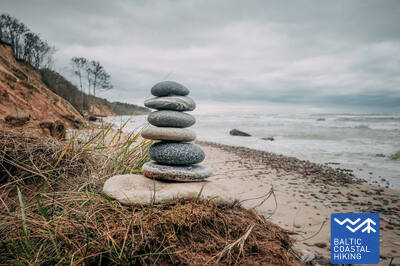
In der Umgebung von Sārnate kann man noch immer die baltische Steilküste genießen. In Richtung Norden verflacht sie allmählich wird und durch einen vom Wasser ausgehöhlten Vordünenwall abgelöst. Zwischen Vendzavas und dem Leuchtturm Užava erstreckt sich der Meeresküste entlang eine für Lettland nicht typische Landschaft, die an eine sandig-steinige Wüste mit spärlicher Vegetation erinnert. Hier befindet sich das ehemalige Übungsgelände der Sowjetarmee. An dieser Stelle und hinter Užava können auf dem Gebiet des ehemaligen Übungsgeländes Graudünen beobachtet werden. Nähert man sich der Mündung des Flusses Užava wird der Strand immer breiter und der Dünenwall immer flacher. Vom romantischen Leuchtturm Užava offenbart sich dem Wanderer der schönste Anblick des Baltischen Küstenwanderweges.
Užava Creek beach boardwalk
Der Holzsteg an der Mündung des Flusses Užava am Meer ist ein 0,5 km langer Rundweg aus Holz, der für Rollstuhlfahrer geeignet ist. Der Holzsteg ist 1,2 Meter breit und hat Ausweichstellen. In der Nähe gibt es einen Parkplatz (GPS: 57.247001, 21.414652). Entlang des Weges gibt es einen Rastplatz, der jedoch nicht für Rollstuhlfahrer zugänglich ist, und es gibt keinen Zugang zum Meeresufer. Der Holzsteg liegt neben dem Jūrtaka-Wanderweg.


9. Etappe. Užava - Ventspils.
Stelle deine eigene Bernsteinsammlung zusammen!
Die ersten 6 Kilometer dieses Streckenabschnitts des Baltischen Küstenwanderweges führen durch ein einsames Küstengebiet mit einem breiten Strand und niedrigen, mit Strandroggen und Strandhafer bedeckten Vordünen dar. Hinder der Mündung des Baches Medole erhebt sich eine eindrucksvolle Steilküste (~ 19 m) mit einem engen, steinigen Strand. Die Steilküste verflacht sich bald und steigt nach etwa zwei Kilometern wieder an. Zwischen den Steilküsten befindet sich ein ehemaliges Übungsgelände der Sowjetarmee. Die letzten fünf Kilometer bis zum Südpier in Ventspils verlaufen über einen breiten, sandigen Strand. Auf der Festlandseite wird er von Graudünen abgegrenzt.
Ventspils Seaside Park
Der Ventspils Seaside Park verfügt über ein etwa 3,5 km langes Wegenetz, darunter den 730 m langen Ankerweg. Die Wege (mit Ausnahme des Dschungelwegs) sind für Rollstuhlfahrer und Eltern mit Kinderwagen zugänglich. Die Wegoberfläche besteht aus Schotter und Asphalt (am Anfang). Ein bequemer Ausgangspunkt zur Erkundung des Parks ist die Kreuzung der Parka- und Loču-Straßen (GPS: 57.389279, 21.537021), wo es Parkplätze und ein WC gibt. Der Park liegt neben dem Jūrtaka-Weg. Für Rollstuhlfahrer und Eltern mit Kinderwagen ist der am besten geeignete Strandzugang in der Nähe des Meeres Eingang 6, der sich innerhalb des Parks befindet.
9. Etappe. Užava - Ventspils.
Stelle deine eigene Bernsteinsammlung zusammen!
Die ersten 6 Kilometer dieses Streckenabschnitts des Baltischen Küstenwanderweges führen durch ein einsames Küstengebiet mit einem breiten Strand und niedrigen, mit Strandroggen und Strandhafer bedeckten Vordünen dar. Hinder der Mündung des Baches Medole erhebt sich eine eindrucksvolle Steilküste (~ 19 m) mit einem engen, steinigen Strand. Die Steilküste verflacht sich bald und steigt nach etwa zwei Kilometern wieder an. Zwischen den Steilküsten befindet sich ein ehemaliges Übungsgelände der Sowjetarmee. Die letzten fünf Kilometer bis zum Südpier in Ventspils verlaufen über einen breiten, sandigen Strand. Auf der Festlandseite wird er von Graudünen abgegrenzt.
10. Etappe. Ventspils - Staldzene.
Durch die Stadt Ventspils
Weiter führt die Wanderroute durch die Stadt Ventspils und die umliegenden Wälder. Der Pfad Jūrtaka schlängelt sich vom Südpier durch das historische Hafenende Ostgals und die Altstadt, überquert den Fluss Venta und setzt seinen Lauf über einen Fußgänger- und Radweg durch Pārventa in Richtung Staldzene fort, Nachdem er einen Bogen um den Hafen herum gemacht hat, führt er wieder zum Strand zurück. Es lohnt sich, „einen Tag frei“ zu nehmen und die interessantesten Orte der Stadt kennenzulernen sowie das Freilichtmuseum am Meer zu besuchen.
Lake Būšnieki Nature Trail
Der Weg um den Būšnieki-See ist ein 9 km langer Rundweg, der für Rollstuhlfahrer und Eltern mit Kinderwagen zugänglich ist. Er verfügt über einen Audioguide, taktile Informationen und einen Parkplatz für Menschen mit eingeschränkter Mobilität. Ein empfohlener Ausgangspunkt ist der Parkplatz auf der Südostseite des Sees (GPS: 57.437632, 21.656062). Der Weg liegt etwa 1 km vom Jūrtaka-Weg entfernt.


15. Etappe. Saunags - Kolka.
Das Herz Europas – Kolkasrags
Über kleine Feldwege und Waldwege von Saunaga führt der Pfad Jūrtaka bis Vaide. Dort kehrt er wieder zur Meeresküste zurück. Bis Kolkasrags erstrecken sich breite, sandige Strände, die sich zu niedrigen Vordünen mit spärlicher Vegetation verflachen. Dahinter erfreuen erneut waldige Dünen das Auge. Auf einer Länge von etwa 2 Kilometern - weggespülte niedrige Dünen, hinter denen der Berg Dumbrkalni emporragt. Kolkasrags - die Grenzlinie zwischen dem Großmeer und Kleinmeer (Rigaer Meeresbucht) - ist einer der beliebtesten Vogelbeobachtungsorte an der Ostseeküste.
Kolka Pine Trail
Der 1,8 km lange Pfad dient der Erkundung der Artenvielfalt der Küstendünen. Er verfügt über zwei Aussichtsplattformen, die für Rollstuhlfahrer zugänglich sind. Die Trockentoiletten sind teilweise für Personen mit Funktionsbeeinträchtigungen angepasst. Es steht ein Parkplatz zur Verfügung (GPS: 57.756668, 22.591180). Der Pfad befindet sich neben dem Jūrtaka-Pfad.


16. Etappe. Kolka - Ģipka.
Entlang der „gesperrten Küste“
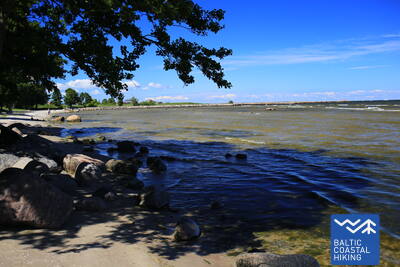
Wenn man das Gesicht von Kolkasrags in Richtung Meeresbucht dreht, merkt man gleich den Unterschied zwischen dem “Großmeer“ und dem “Kleinmeer“. Die ersten zehn Kilometer des Baltischen Küstenwanderweges verlaufen entlang der Küste des Nationalparks Slītere. Der Pfad passiert die Bauten der ehemaligen Fischerkolchose, einen Schiffsliegeplatz und die Steilküste Ēvaži. Deren Umgebung wird von einem ungewöhnlich schmalen, sandigen Strand mit darüber hängenden Schwarzerlen geprägt. Auch weiter bis Ģipka erstreckt sich ein schmaler, sandiger Strand mit vielen Nassgallen, die durch den nah an die Oberfläche getretenen, wasserundurchlässigen Untergrund entstanden sind, und Mündungen von kleineren, im Sommer ganz seichten Flüsschen. Das Küstengebiet des Nationalparks Slītere war während der Sowjetzeit ein doppelt geschlossenes Territorium – es war Grenzzone und Naturschutzgebiet.
Ēvažu Nature Trail
Der Weg ist für die Besichtigung einer der seltenen Steilküsten des Rigaischen Meerbusens konzipiert. Rollstuhlfahrer können die Aussichtsplattform erreichen, die einen Blick auf den Rigaischen Meerbusen bietet. Der Weg ist 1,2 km lang. Der Untergrund besteht zu Beginn aus Schotter, danach ausgetretener Pfad und Holzstege mit Treppen in der Nähe der Steilküste. Auf der gegenüberliegenden Seite der Straße Tukums-Kolka gibt es einen Parkplatz (GPS: 57.677789, 22.567982). Der Weg verläuft neben dem Jūrtaka-Weg.


17. Etappe. Ģipka - Kaltene.
Der steinreichste Strand in Kurland
Von Ģipka bis Roja erstreckt sich ein sandiger, nicht besonders breiter Strand mit bezaubernden Dünen und Strandkieferwäldern. Kurz vor Roja ist der Strand dicht mit Sandrohr bewachsen. Der Streckenabschnitt zwischen Roja und der Kirche in Kaltene ist der einzigartigste Strand Lettlands. Dort ist die Meeresküste mit einem sehr schmalen Strand von kleinen Küstenvorsprüngen und Golfen ausgekerbt. Am Strand sind Felsbrocken unterschiedlicher Größe zu beobachten, die sich unter dem grünen Laubwerk von Schwarzerlen verbergen. An einigen Stellen ragen weit ausgebreitete Wurzelrosette von Bäumen empor, die an den Strand angespült wurden. Streckenweise verläuft entlang der Küste ein Weg, an dem sich viele ehemalige Fischerhäuser aneinanderreihen.
Walking Path at Roja Beach
Die Holzstege sind für Rollstuhlfahrer und Eltern mit Kinderwagen geeignet. Es gibt einen Informationsstand in Blindenschrift und eine taktile Strandkarte. Zur Ausstattung gehören ein behindertengerechtes WC und ein Parkplatz (GPS: 57.510088, 22.799207). Die Promenade ist in eine Richtung 0,5 km lang. Rollstuhlfahrer können die Promenaden zwar benutzen, können das Meer jedoch nicht erreichen, da es keine Rampe gibt. Die Promenaden sind breit und verfügen über Geländer an den Seiten und Überholflächen.


17. Etappe. Ģipka - Kaltene.
Der steinreichste Strand in Kurland
Von Ģipka bis Roja erstreckt sich ein sandiger, nicht besonders breiter Strand mit bezaubernden Dünen und Strandkieferwäldern. Kurz vor Roja ist der Strand dicht mit Sandrohr bewachsen. Der Streckenabschnitt zwischen Roja und der Kirche in Kaltene ist der einzigartigste Strand Lettlands. Dort ist die Meeresküste mit einem sehr schmalen Strand von kleinen Küstenvorsprüngen und Golfen ausgekerbt. Am Strand sind Felsbrocken unterschiedlicher Größe zu beobachten, die sich unter dem grünen Laubwerk von Schwarzerlen verbergen. An einigen Stellen ragen weit ausgebreitete Wurzelrosette von Bäumen empor, die an den Strand angespült wurden. Streckenweise verläuft entlang der Küste ein Weg, an dem sich viele ehemalige Fischerhäuser aneinanderreihen.
18. Etappe. Kaltene - Mērsrags.
Die vielfältige Küste
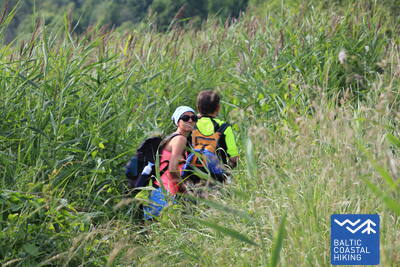
In biologischer, kulturhistorischer und landschaftlicher Hinsicht ein sehr vielfältiger Küstenanschnitt des Baltischen Küstenwanderweges. In der Nähe von Kaltene ist die Meeresküste von winzigen Golfen mit steinigen Stränden bunt gemustert. Weiter erstreckt sich der mit Steinen bedeckte Strand nur ein paar Meter breit. Streckenweise ist er mit Lehmschichten, Rohrfeldern bedeckt, an einigen Stellen – mit angespülten Wasserpflanzen. Auf der Strecke von Valgalciems bis Mērsrags kommen wieder sandige Strände mit Sandbänken zum Vorschein. Hinter Mērsrags verläuft der Routenabschnitt über einen Weg, der an der lutheranischen Kirche in Richtung Meer abbiegt und bis zum Zentrum von Mērsrags einer Strandwiese entlang führt.
Boardwalk in Upesgrīva
Liegt zwischen dem Campingplatz Lūši und dem Meer (GPS: 57.381441, 23.025370). Der Promenadenweg hat keine Seitengeländer und keine Ausweichflächen. Er ist für Rollstuhlfahrer mit Assistent zugänglich. Seine Länge beträgt in eine Richtung etwa 90 Meter. Er bietet keinen Zugang zum Meeresufer. Er liegt in der Nähe des Küstenwanderwegs (Jūrtaka).


Boardwalk near Mērsrags Lighthouse
Befindet sich in der Bākas-Straße 60. Der Steg ermöglicht Rollstuhlfahrern, vom Parkplatz (GPS: 57.365315, 23.120436) zu den Dünen zu gelangen, von wo aus man das Meer sehen kann. Der Steg ist teilweise mit Kantenschutz versehen und hat keine Wendebereiche. Die Länge beträgt ungefähr 150 m (Hin- und Rückweg). Er befindet sich in der Nähe des Küstenwanderwegs.


19. Etappe. Mērsrags - Engure.
Im Naturpark Engure
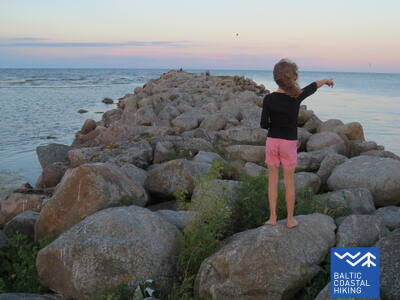
Vom Dorfzentrum bis zum Strand führt ein von Kiefern umschlossener Waldweg. Weiter windet sich der Baltische Küstenwanderweg zwischen einem von Sandrohr und anderen Pflanzen reichlich bewachsenen und steinigen Strand auf einer Seite und einer bewaldeten Düne auf der anderen Seite. Stellenweise ist der Strand mit kleinen, runden Kieselsteinen bedeckt, andernorts sind Graudünen mit üppiger Vegetation zu sehen. In der Umgebung von Bērzciems erstrecken sich Strandwiesen mit Sandbarren weit ins Meer. Sie sind ein guten Platz, um Vögel zu beobachten. Bis zum Dorf Abragciems setzt sich die bewachsene Meeresküste fort, die dann bis Engure durch einen Strand abgelöst wird.
Engure Nature Trail
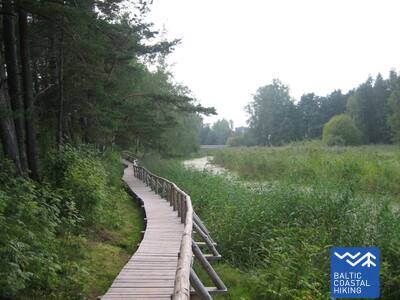
Vom Parkplatz (GPS: 57.171428, 23.222504) in der Slimnīcas-Straße führt ein Holzsteg über die Dünen zum Meer. Er ist für Rollstuhlfahrer zugänglich. Aufgrund der Steigung kann Hilfe erforderlich sein. Der Weg ist in eine Richtung etwa 200 Meter lang. Er befindet sich in der Nähe des Küstenwanderwegs (Jūrtaka).


20. Etappe. Engure - Ragaciems.
Fischerdörfer und geräuchertes Fisch
Der Baltische Küstenwanderweg schlängelt sich zuerst durch das Dorf Engure, dann zwischen einem ziemlich schmalen Strand und bezaubernden, waldigen Dünen und führt bis zur Düne des Dorfes Plieņciems. Hinter der Düne wird der sandige Strand immer breiter und offenbart einen Blick auf breite Sandbänke. In Richtung Festland ragen hier bewachsene Steilküsten mit einem Treppenweg und gut ausgestatteten Stegen bis zur Landstraße Kolka – Tukums empor. Allerdings muss man damit rechnen, dass es hier an warmen Sommertagen viele Urlauber gibt. Das abschließende Drittel dieses Wegabschnitts liegt im Nationalpark Ķemeri.
Apšuciems
In Apšuciems stehen zwei schwimmende Strandrollstühle für Menschen mit eingeschränkter Mobilität zur Verfügung. Diese sind nach vorheriger Absprache unter +371 26132761 in der Apšuciems-Schule erhältlich. Benutzer müssen einen eigenen Assistenten mitbringen, der ihnen beim Hin- und Rückweg zum Wasser, beim Schwimmen und Zurückkommen hilft. Schwimmwesten sind ebenfalls erhältlich. Es gibt Pläne, im Jahr 2025 einen Zugang zum Meer zu bauen, der Rollstuhlzugang, Westen, Umkleidekabinen und spezielle Sonnenmatten umfassen wird. Mit Hilfe sind kleine Ausflüge entlang des harten Sandabschnitts der Küste möglich. Dieser befindet sich am Baltic Sea Trail.

Plieņciems White Dunes Grenzpfad
Der Weg befindet sich an der südlichen Grenze des Plieņciems, in Richtung Riga und Engure.
Der Name Plieņciems stammt von dem baltischen Wort „pliens“ - Kalkstein oder Mergelis. Die erste urkundliche Erwähnung des Dorfes stammt aus dem Jahr 1551, auf Landkarten taucht es jedoch erst ab 1702 als bewohnter Ort auf. In der Mitte des 18. Jahrhunderts erwähnt das Kirchenbuch von Engure, dass es in Plieņciems neun Bauernhöfe gab, die das Recht hatten, im Meer und im Engure-See zu fischen und Seegras zu sammeln.
Der Weg führt von der Straße zum Meer und führt die Wanderer über den Dünenwall. Die Oberfläche des Weges ist so gestaltet, dass er für Rollstuhlfahrer (vorzugsweise mit einer Begleitperson) und Familien mit Kindern in Kinderwagen zugänglich ist. Der Strand verfügt über einen Umkleideraum und einen kleinen Spielplatz. Auf dem Weg gibt es keine ausgewiesene Fläche für den Platztausch mit dem Gegenverkehr.


20. Etappe. Engure - Ragaciems.
Fischerdörfer und geräuchertes Fisch
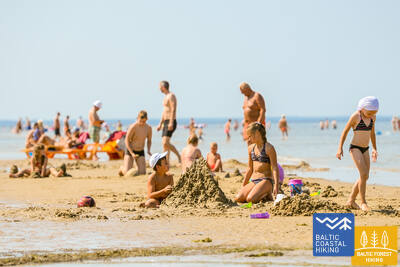
Der Baltische Küstenwanderweg schlängelt sich zuerst durch das Dorf Engure, dann zwischen einem ziemlich schmalen Strand und bezaubernden, waldigen Dünen und führt bis zur Düne des Dorfes Plieņciems. Hinter der Düne wird der sandige Strand immer breiter und offenbart einen Blick auf breite Sandbänke. In Richtung Festland ragen hier bewachsene Steilküsten mit einem Treppenweg und gut ausgestatteten Stegen bis zur Landstraße Kolka – Tukums empor. Allerdings muss man damit rechnen, dass es hier an warmen Sommertagen viele Urlauber gibt. Das abschließende Drittel dieses Wegabschnitts liegt im Nationalpark Ķemeri.
21. Etappe. Ragaciems - Dubulti.
Der historische Kurort Jūrmala
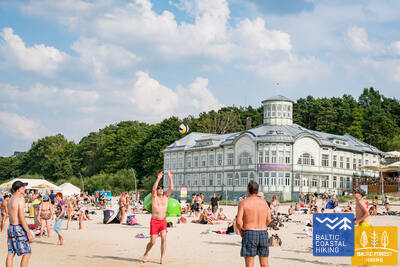
Von Ragaciems eröffnet sich ein weiter Ausblick über die ganze Küste von Jūrmala. Das erste Drittel dieses Streckenabschnitts führt durch den Nationalpark Ķemeri. Dort kann man sich mit historischen Fischerdörfern, der ehemaligen Fischerbootsanlegestelle und dem Fischmarkt in Ragaciems sowie den Dünenbiotopen vertraut machen. Auch kann man Vögel im Mündungsgebiet des Flusses Starpiņupīte beobachten. Von Jaunķemeri bis Dubulti verläuft der Pfad entlang dem breitesten Sandstrand der Rigaer Meeresbucht durch den historischen Kurort der Stadt Jūrmala und die längste Stadt Lettlands. An warmen und schönen Sommertagen muss mit zahlreichen Strandbesuchern gerechnet werden.
Jūrmalas pilsētas pludmales
Die Stadtstrände von Jurmala sind für Menschen mit funktionellen Beeinträchtigungen zugänglich, darunter auch für Rollstuhlfahrer und Senioren. In Jūrmala gibt es 14 angepasste Zugangspunkte zum Meer für Rollstuhlfahrer: Linie 36, Vienības prospekts (2 Zugangspunkte), Turaidas iela (2 Zugangspunkte), Pilsonu iela, Baznīcas iela, Kļavu iela, Līgatnes iela, Dzimtenes iela, Vēju iela, Atbalss iela, Kapteiņa Zolta iela und Jaunķemeri-Straße. Diese Zugangspunkte sind unter Berücksichtigung des Untergrunds und des Geländes so konzipiert, dass sie sowohl für Personen mit Funktionseinschränkungen als auch für Personen mit Kinderwagen geeignet sind. Darüber hinaus stehen an vier Standorten – Vaivari, Kaugguri, Jaunķemeri und Jaundubulti – erweiterte und komfortablere Umkleidekabinen zur Verfügung.
Kupskalni Nature Trail
Der Weg erstreckt sich einen halben Kilometer am rechten Ufer des Flusses Siliņupe entlang und führt von der Straße Sloka-Talsi zum Meer. Er ist teilweise für Rollstuhlfahrer mit Hilfe zugänglich, da Baumwurzeln am Anfang des Weges ein Hindernis darstellen können. Der weitere Abschnitt des Weges (breite Promenaden mit Ausweichstellen) ist zugänglich. Teilweise sind Toiletten zugänglich. Die Wanderung kann von einer nahe gelegenen Tankstelle aus begonnen werden (GPS: 56.992203, 23.522736).


22. Etappe. Dubulti - Lielupe - Bulduri.
Die beliebtesten Strände Lettlands
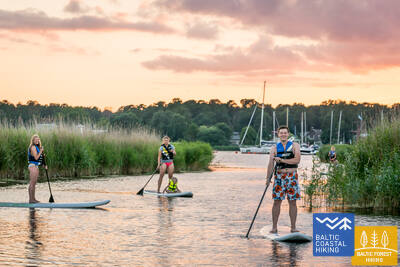
Zwischen Dubulti und Lielupe erstreckt sich der breiteste Sandstrand der Rigaer Meeresbucht – es ist der wertvollste Schatz des Kurorts Jūrmala, in dem es zahlreiche Strandcafés und verschiedene Erholungsmöglichkeiten gibt, Die Wälder der Küstendünen sind von einem dichten Wegenetz durchzogen, das zum Joggen und Wandern geeignet ist. Der Baltische Küstenwanderweg führt zwischen dem Strand Lielupe und dem Freilichtmuseum Jūrmala durch den Naturpark Ragakāpa. Am bequemsten zurück nach Bulduri gelangt man über die Straßen Bulduru prospekts und 5. līnija.
Jūrmalas pilsētas pludmales
Die Stadtstrände von Jurmala sind für Menschen mit funktionellen Beeinträchtigungen zugänglich, darunter auch für Rollstuhlfahrer und Senioren. In Jūrmala gibt es 14 angepasste Zugangspunkte zum Meer für Rollstuhlfahrer: Linie 36, Vienības prospekts (2 Zugangspunkte), Turaidas iela (2 Zugangspunkte), Pilsonu iela, Baznīcas iela, Kļavu iela, Līgatnes iela, Dzimtenes iela, Vēju iela, Atbalss iela, Kapteiņa Zolta iela und Jaunķemeri-Straße. Diese Zugangspunkte sind unter Berücksichtigung des Untergrunds und des Geländes so konzipiert, dass sie sowohl für Personen mit Funktionseinschränkungen als auch für Personen mit Kinderwagen geeignet sind. Darüber hinaus stehen an vier Standorten – Vaivari, Kaugguri, Jaunķemeri und Jaundubulti – erweiterte und komfortablere Umkleidekabinen zur Verfügung.
23. Etappe. Bulduri - Stadtzentrum Rīga.
Durch Wälder nach Rīga
Diese Route ist eine gute Alternative, wie man Rīga von Jūrmala her über einen Waldweg erreichen kann. Hinter der Brücke Lielupe schlängelt sich der Pfad Jūrtaka durch Priedaine und offenbart den Blick auf die herrliche Holzbebauung der Ortschaft. Der Pfad verläuft dem rechten Ufer des Flusses Lielupe entlang und biegt südlich der Düne Bolderāja ab. Dann führt der Pfad durch den Wald Kleisti in Richtung des Friedhofes Lāčupe. Weiter verläuft der Pfad über die historischen Landstraßen des Stadtteils Pārdaugava nach Dzegužkalns, dem Zunda-Kanal und der Bucht Āgenskalns entlang bis zur Daugava. Dort überquert er die Akmens tilts (Steinbrücke) und erreicht den Rathausplatz der Stadt Rīga.
Jūrmalas pilsētas pludmales
Die Stadtstrände von Jurmala sind für Menschen mit funktionellen Beeinträchtigungen zugänglich, darunter auch für Rollstuhlfahrer und Senioren. In Jūrmala gibt es 14 angepasste Zugangspunkte zum Meer für Rollstuhlfahrer: Linie 36, Vienības prospekts (2 Zugangspunkte), Turaidas iela (2 Zugangspunkte), Pilsonu iela, Baznīcas iela, Kļavu iela, Līgatnes iela, Dzimtenes iela, Vēju iela, Atbalss iela, Kapteiņa Zolta iela und Jaunķemeri-Straße. Diese Zugangspunkte sind unter Berücksichtigung des Untergrunds und des Geländes so konzipiert, dass sie sowohl für Personen mit Funktionseinschränkungen als auch für Personen mit Kinderwagen geeignet sind. Darüber hinaus stehen an vier Standorten – Vaivari, Kaugguri, Jaunķemeri und Jaundubulti – erweiterte und komfortablere Umkleidekabinen zur Verfügung.
Babīte Rhododendron Nursery
Es wurde ein 1,9 Kilometer langer Pfad angelegt, der für Rollstuhlfahrer und Eltern mit Kinderwagen zugänglich ist. Die Oberfläche des Pfades ist asphaltiert. Es gibt einen ausgewiesenen Parkplatz (GPS: 56.962330, 23.952280) und eine behindertengerechte Toilette. Der Pfad liegt etwa 2,7 Kilometer vom Jūrtaka-Pfad entfernt.
Daugavgrīva Nature Trail
Der Weg beginnt am Parkplatz (GPS: 57.036769, 24.018166) in der Nähe der Valentīna Pikuļa-Straße und führt über das Daugavgrīva-Sumpfgebiet zu den Dünen und zum Meer. Der Weg ist in Meeresnähe asphaltiert und der asphaltierte Abschnitt ist für Rollstuhlfahrer zugänglich. Entlang des Weges wurde ein Vogelbeobachtungsturm errichtet, dessen erste Etage für Rollstuhlfahrer zugänglich ist. Der Weg ist etwa 12,5 Kilometer vom Jūrtaka-Weg entfernt, der an der Meeresküste in Daugavgrīva liegt.

24. Etappe. Stadtzentrum Rīga - Vecāķi.
Die Altstadt - Teil des UNESCO-Weltkulturerbe
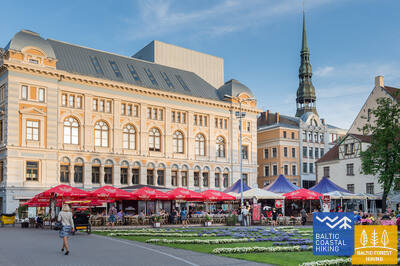
Der Routenabschnitt verläuft durch das Stadtzentrum von Rīga - die Altstadt, den Stadtkanal entlang, durch den Kronvalda-Park, die Alberta-Straße (Jugendstilbauten) und dann weiter durch die Miera-Straße über den Großen Friedhof, die Alleen Kokneses prospekts und Ostas prospekts und den Mežaparks (Kaiserwald) hindurch erreicht man den Stadtteil Jaunmīlgrāvis und passiert den Stadtteil Mīlgrāvis. Über die Allee Vecāķu prospekts führt der Weg weiter bis nach Ziemeļblāzma und zum Ufer der Vecdaugava, wovon Vecāķi nur wenige Kilometer entfernt ist. Nach einer zweitägigen Wanderung durch die Stadt Rīga führt der Pfad Jūrtaka wieder zum Strand zurück.
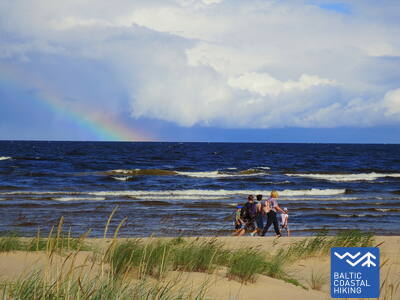
Mangaļsala walking paths
Zwei Wanderwege in Mangaļsala führen durch Dünengebiete und Küstenwälder zum Meer. Der erste Wanderweg (GPS: 57.071642, 24.087599) wird Rollstuhlfahrern mit Begleitperson empfohlen, da er zum Meer führt, aber keinen direkten Zugang zum Strand bietet. Der zweite Wanderweg (GPS: 57.062730, 24.055460) beginnt als unbefestigter Weg und wird später zu einem breiten Holzsteg, über den Rollstuhlfahrer den Strand erreichen können. Der dritte Wanderweg (GPS: 57.061976, 24.041811) führt zum Ostpier. Obwohl er nicht speziell für Rollstuhlfahrer konzipiert ist, kann er, einschließlich des Piers selbst, mit Begleitperson befahren werden, außer bei starkem Wind oder Sturm. Sowohl der erste als auch der zweite Wanderweg verfügen über eigene Parkplätze und WC-Anlagen. Der nächste Wanderweg ist etwa 3,5 km von Jūrtaka entfernt.


25. Etappe. Vecāķi - Carnikava.
Zwischen den Mündungsgebieten der Flüsse Daugava und Gauja
Dieser Abschnitt des Baltischen Küstenwanderweges ist eine verhältnismäßig kurze Wanderung entlang eines bezaubernden Sandstrandes. Von der Festlandseite ist er durch lichterfüllte Kiefernwälder mit eindrucksvollen Dünen und Dünenwallen abgegrenzt. Vom Strand bis Carnikava führt der Pfad durch eine Waldpromenade. Über einen Schutzdamm verläuft der Pfad um den Fluss Vecgauja herum und erreicht die Fußgängerbrücke über die Gauja. Vor Beginn oder zum Abschluss der Wanderung lohnt es sich, die Atmosphäre Kneipen oder Sommercafés am Strand Vecāķi oder in Carnikava gemütlich zu genießen.
25. Etappe. Vecāķi - Carnikava.
Zwischen den Mündungsgebieten der Flüsse Daugava und Gauja
Dieser Abschnitt des Baltischen Küstenwanderweges ist eine verhältnismäßig kurze Wanderung entlang eines bezaubernden Sandstrandes. Von der Festlandseite ist er durch lichterfüllte Kiefernwälder mit eindrucksvollen Dünen und Dünenwallen abgegrenzt. Vom Strand bis Carnikava führt der Pfad durch eine Waldpromenade. Über einen Schutzdamm verläuft der Pfad um den Fluss Vecgauja herum und erreicht die Fußgängerbrücke über die Gauja. Vor Beginn oder zum Abschluss der Wanderung lohnt es sich, die Atmosphäre Kneipen oder Sommercafés am Strand Vecāķi oder in Carnikava gemütlich zu genießen.
Garciems nature trail
Der Holzsteg führt zur Mündung des Eimuri-Kanals am Meer. Das Ende des Holzstegs liegt nahe am Ufer und mit Hilfe eines Assistenten kann das Meer erreicht werden. Er ist für Rollstuhlfahrer und Eltern mit Kinderwagen geeignet. Ein Parkplatz (GPS: 57.108161, 24.192324) und WC sind vorhanden. Die Länge in eine Richtung beträgt 0,7 km. Er befindet sich neben Jūrtaka.
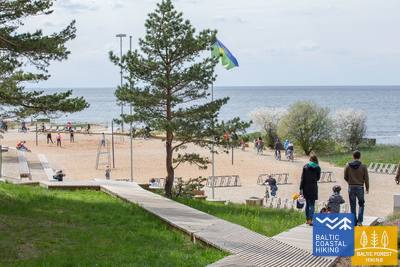
Carnikava Promenade
Verbindet Carnikava mit der Meeresküste. Der Weg ist gepflastert, aber in den Sanddünen – mit Holzstegen. Am Meeresufer gibt es Gehwege und Aussichtsplattformen mit Liegestühlen. Die Länge der Strecke in eine Richtung beträgt 1,8 km. Es ist für Rollstuhlfahrer und Eltern mit Kinderwagen zugänglich. In der Laivu-Straße wurden ein Parkplatz (GPS: 57.133531, 24.265631), angepasste Toiletten, Informationsstände und Rastplätze eingerichtet. Der sandige Bereich des Meeresufers ist nicht für Rollstuhlfahrer zugänglich. Der letzte Abschnitt der Promenade weist eine Steigung von 9,2 % auf. Jurtaka bewegt sich entlang der Carnikava-Promenade. 2024/2025 G. An der Carnikava-Promenade ist die Einrichtung einer speziellen Route für spezielle Geländerollstühle geplant, die ihren Benutzern zusammen mit einem Assistenten zur Verfügung stehen.


26. Etappe. Carnikava - Saulkrasti.
Der Sonnenuntergangspfad mit Blick auf romantische Sonnenuntergänge
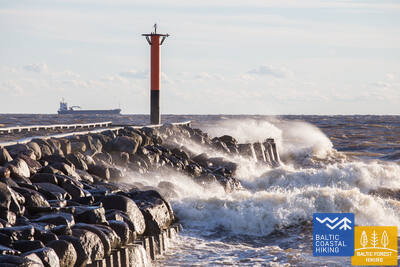
Anfangs führt der Routenabschnitt über den Schutzdamm der Gauja im Dorf Gauja. Dann erreicht das Mündungsgebiet des Flusses, was eine ausgezeichneter Stelle zur Vogelbeobachtung ist. Weiter verläuft der Wanderweg über einen sandigen Strand bis zur Mündung des Flusses Inčupe. Um die Brücke erreichen zu können, muss man kurz vor der Mündung in Richtung Festland abbiegen. Die nächsten paar Kilometer verlaufen über die waldreichen Dünengipfel des Sonnenuntergangspfades (Saulrieta taka), die eine wunderbare Aussicht auf den Strand offenbaren. Nach der Überquerung des Flusses Pēterupe (Seilbrücke) erreicht der Pfad Jūrtaka den Meerespark “Jūras parks” in Saulkrasti.
Lilaste Beach
Nimmt ans Meer. Seine Länge in eine Richtung beträgt 130 m. Los geht es am Parkplatz (GPS: 57.187403, 24.329523), von dem aus eine Person im Rollstuhl mit Hilfe eines Helfers zum Strand gelangen kann. Es liegt neben Jurtaka.

White Dune
Eine der malerischsten Dünen der Rigaer Bucht. Für Rollstuhlfahrer mit Begleitperson zur Aussichtsplattform vom Parkplatz aus zugänglich (GPS: 57.233560, 24.393407). Baltas Kapa ist Teil der Jūrtakas-Route.
Path and wooden boardwalk network in the coastal dunes of Saulkrasti
Der Weg liegt zwischen der Raiņa-Straße und der Bīriņu-Straße (Seepark, Tourismusinformationszentrum Saulkrasti) und ist für Rollstuhlfahrer und Eltern mit Kinderwagen geeignet. Er verläuft parallel zum Jūrtaka-Pfad. Der einfachste Zugang zum Weg und zur Promenade erfolgt vom Parkplatz aus (GPS: 57.267111, 24.413875).


26. Etappe. Carnikava - Saulkrasti.
Der Sonnenuntergangspfad mit Blick auf romantische Sonnenuntergänge
Anfangs führt der Routenabschnitt über den Schutzdamm der Gauja im Dorf Gauja. Dann erreicht das Mündungsgebiet des Flusses, was eine ausgezeichneter Stelle zur Vogelbeobachtung ist. Weiter verläuft der Wanderweg über einen sandigen Strand bis zur Mündung des Flusses Inčupe. Um die Brücke erreichen zu können, muss man kurz vor der Mündung in Richtung Festland abbiegen. Die nächsten paar Kilometer verlaufen über die waldreichen Dünengipfel des Sonnenuntergangspfades (Saulrieta taka), die eine wunderbare Aussicht auf den Strand offenbaren. Nach der Überquerung des Flusses Pēterupe (Seilbrücke) erreicht der Pfad Jūrtaka den Meerespark “Jūras parks” in Saulkrasti.
27. Etappe. Saulkrasti - Lauči.
Das Tor zum steinreichsten Strand in Vidzeme
Die ersten Kilometer bis Zvejniekciems können dem Strand entlang zurückgelegt werden. Oder auch über einen Pfad, der sich durch einen Dünenwald mit alten Kiefern windet. Für diese ist eine “krokodilartige“ Borke charakteristisch. Hier kommt man auch an einer alten Holzhütte mit Fischernerzen und Fischerzubehör vorbei. Kurz vor dem Hafen Skulte kommen am Strand Zvejniekciems die ersten Steine zum Vorschein. Nachdem er das Mündungsgebiet des Flusses Aģe und den Hafen umbiegt, führt der Baltische Küstenwanderweg zurück zum Strand. Von dort ist das Kap Ārņu bereits aus der Ferne zu sehen. Die Vielfältigkeit der Küstenlandschaften.
Path and wooden boardwalk network in the coastal dunes of Saulkrasti
Der Weg liegt zwischen der Raiņa-Straße und der Bīriņu-Straße (Seepark, Tourismusinformationszentrum Saulkrasti) und ist für Rollstuhlfahrer und Eltern mit Kinderwagen geeignet. Er verläuft parallel zum Jūrtaka-Pfad. Der einfachste Zugang zum Weg und zur Promenade erfolgt vom Parkplatz aus (GPS: 57.267111, 24.413875).
28. Etappe. Lauči - Tūja.
Die vergangene Ära der Segelschiffe
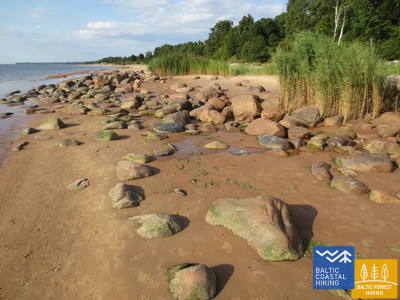
Eine herrliche Küstenlandschaft der Region Vidzeme mit vielen steinreichen Erdzungen und Steinen im Meer. Sie werden von kleinen, sandigen Buchten abgelöst, in denen die im Sommer austrocknenden Bäche und kleinen Flüsschen münden. An einigen Stellen ist der Strand vollständig mit grauen Steinen bedeckt. Allmählich kommen auch mit Sandrohr bewachsene Flächen zum Vorschein. Kurz vor Tūja finden sich die ersten Sandsteinfreilegungen.
Munchausen’s Beer Mug Trail
Der 1,3 km lange Weg (einfache Strecke) befindet sich am Dunte Manor und beginnt in der Nähe des Minhauzens Museums. Der Weg besteht aus 1,5 m breiten Holzstegen mit mehreren Ausweichstellen. Die Erkundung des Weges kann bequem vom Parkplatz aus beginnen (GPS: 57.405620, 24.424681). Der Weg liegt 1,7 km vom Jūrtaka-Weg entfernt.
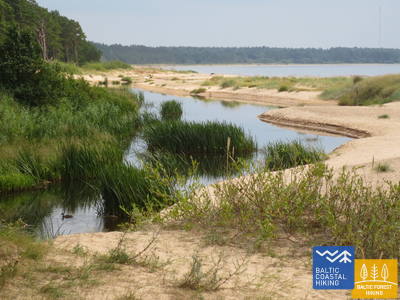
29. Etappe. Tūja - Svētciems.
Der steinreichste Strand in Vidzeme
Einer der schönsten Abschnitte des Pfades Jūrtaka beginnt nach der Überquerung des Flusses Zaķupīte. Bis zum Leuchtturm Ķurmrags erstrecken sich vorwiegend sandige Strände mit kleinen steinreichen Stellen. Danach beginnt der Steinstrand von Vidzeme, wo sich Erdzungen und kleine Buchten ablösen. Am Strand ragen bis zu 4 Meter hohe Sandsteinfreilegungen empor. Hinter dem Meleku-Kap führt der Pfad wieder über einen vorwiegend sandigen Strand, der kurz vor der Mündung des Flusses Svētupe dicht bewachsen ist. Dazu kommt Schilfrohr, das man über einen Waldweg umlaufen muss.
Rest area "Vasas"
Es wurden eine Aussichtsplattform und ein Parkplatz (GPS: 57.520544, 24.379052) angelegt, die für Rollstuhlfahrer zugänglich sind. Sie befinden sich neben dem Jūrtaka-Wanderweg.
Veczemju Cliffs
In der Nähe der Veczemju-Klippen gibt es eine Rampe für Rollstuhlfahrer mit Hilfe. Der Strandsand ist jedoch nicht für Rollstuhlfahrer geeignet. Die Basis der Rampe wird häufig durch Stürme beschädigt. Sie befindet sich in der Nähe des Baltischen Küstenwanderwegs (Jūrtaka).


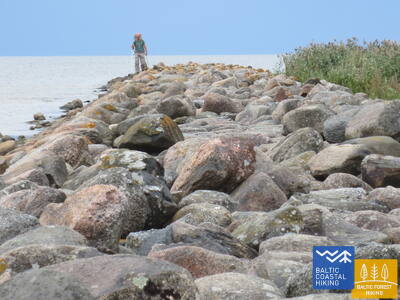
30. Etappe. Svētciems - Ainaži.
Das Königsreich der Neunaugen
The beach between Svētciems village and Salacgrīva is thickly overgrown, so the Baltic Coastal Hiking Route continues on a forest trail meandering among the dunes. To get from Salacgrīva to Kuiviži, you can take the sandy beach or forest trails. From Kuiviži to the Vēverupe River, you have to bypass the Randu Meadows via a forest road located on the east side of the A1 road. After passing the Vēverupe River, the Baltic Coastal Hiking Route returns to a thickly overgrown beach and then leaves it next to the estuary of the Blusupīte River to reach Ainaži Pier by going along Kāpu and Valdemāra iela. You have covered ~ 580 km in Latvia and reached the state border.
Salacgrīvas promenade
The approximately 260-meter-long, well-maintained promenade (including Slavas Alley) along the right bank of the Salaca River is accessible for wheelchair users with the assistance of a helper. You can start exploring from the parking lot (GPS: 57.756060, 24.358155). It is located near the Baltic Coastal Hiking Trail (Jūrtaka).


Monument "White Sun"
Located in Ainaži. A wooden walkway, approximately 150 meters long, has been created for the purpose of viewing it (starting GPS: 57.859628, 24.347306). It is accessible to wheelchair users with assistance and to parents with strollers. The distance from the parking lot to the walkway is about 250 meters. It is located near the Coastal Trail.


Krasta ielas promenāde Salacgrīvā
Around 0.8 km long, it is created along the left bank of Salaca from the bridge to Meža street, where the tennis courts are located. Accessible to people in wheelchairs. Places for rest and viewing have been created, at Meža Street - an adapted WC. Covering - modern pavement.


Laipas līdz Salacgrīvas pludmalei
Nuo Jūrmalos gatvės automobilių stovėjimo aikštelės (57.75083, 24.34911) į paplūdimį sukurti du mediniai liepteliai. Prieinama neįgaliojo vežimėliams su asistentu, nes lentinio tako per kopą vietoje gali būti supuvusio smėlio. Automobilių stovėjimo aikštelėje yra tualetas. Lentinio tako danga - medinė. Dviejų neįgaliųjų vežimėlių ant lentinio tako sukeisti negalima.


30. Etappe. Svētciems - Ainaži.
Das Königsreich der Neunaugen
Paplūdimys tarp Svētciemo kaimo ir Salacgryvos yra tankiai apaugęs, todėl Baltijos pajūrio žygių maršrutas tęsiasi miško takeliu, vingiuojančiu tarp kopų. Iš Salacgrivos į Kuivižius galite nuvykti smėlio paplūdimiu arba miško takais. Nuo Kuivižių iki Vėverupės upės Randu pievas tenka aplenkti miško keliuku, esančiu rytinėje A1 kelio pusėje. Pravažiavus Vēverupės upę, Baltijos pakrantės žygių maršrutas grįžta į tankiai apaugusį paplūdimį ir iš jo išeina šalia Blusupites upės žiočių, kad pasiektų Ainaži prieplauką, eidami Kāpu ir Valdemāra gatve. Latvijoje įveikėte ~ 580 km ir pasiekėte valstybės sieną.
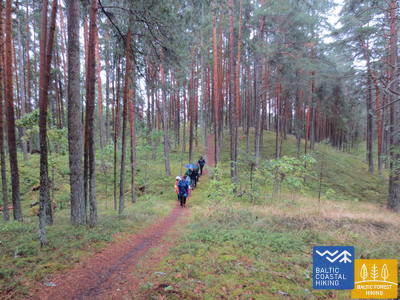
32. Etappe. Kabli - Häädemeeste.
Vögel, Dünen und Wälder
Šis maršrutas ypač rekomenduojamas paukščių stebėtojams. Norėdami įveikti Baltijos pakrantės pėsčiųjų maršruto atkarpą, jungiančią Kabli ir Hademeeste pietus, turėsite važiuoti senuoju Pernu–Rygos keliu, nes per pajūrį driekiasi nendrinės pievos ir lagūnos. Prieš pasiekiant Häädemeeste, Baltijos pakrantės pėsčiųjų maršrutas atsišakoja nuo kelio ir vingiuoja per Jaagupi gamtos rezervatą (aplink rytinę gyvenvietės pusę), eidamas aukštų kopų gale ir nusileisdamas žemyn iki gilių duburių tarp kopų, uždengtų retas pušynas. Čia rasite gerų vietų uogauti ir grybauti.
Kabli nature trail
Takas supažindina lankytojus su pajūrio kopomis ir jų gamtos vertybėmis. Jis prasideda automobilių stovėjimo aikštelėje (GPS: 58.019424, 24.450986), esančioje netoli Kablio lankytojų centro. Tako ilgis 1,8 km. Tako dangos – žvyro, miško takai, 1,5 m pločio mediniai lentų takai. Takas pritaikytas neįgaliųjų vežimėliams, yra pritaikytas tualetas. Informaciniai stendai yra įrengti palei taką, kuriame taip pat yra apžvalgos aikštelė ir du paukščių stebėjimo bokštai (negalima neįgaliojo vežimėliu). Jis yra netoli Pakrantės tako.


34. Etappe. Uulu - Pärnu.
Durch Feuchtgebiete nach Pärnu
Pirmiausia Baltijos pajūrio pėsčiųjų maršrutas eina senais pakrantės keliais, apsuptais pušynų, tačiau pravažiavus Lottemaa parką pasuka jūros link ir išeina į Reiu paplūdimį. Toliau žygis tęsiasi per apaugusį paplūdimį (plačios seklumos, kai vėjas sukuria vandens nutekėjimą) ir už kiek mažiau nei 4 km reikia sukti į vidų, kirsti golfo aikštyną ir sukti Pernu kryptimi. Netoli Raeküla rajono, jis gyvatės nedideliu takeliu, sudarantis ribą tarp didelės pakrantės pelkės ir miško. Apėjus šlapžemę ~ 6 km, Pernu paplūdimyje išnyra Baltijos pajūrio žygių maršrutas. Toliau kelias eina per vakarinę Pernu senamiesčio dalį, kerta Pernu ir Saugos upes ir baigiasi Vana-Pernu rajone.
Pärnu Coastal Meadow Hiking Trail
Taku tyrinėjamos drėgnos pakrantės pievos, lagūnos, vietinis paukščių ir augalų gyvenimas. Jis suprojektuotas ovalo formos su apžvalgos platforma (galima patekti į pirmąjį aukštą) ir tęsiasi 600 metrų. Apsilankymą patogiai galima pradėti iš šalia esančios automobilių stovėjimo aikštelės (GPS: 58.372397, 24.507902). Tako dangą sudaro mediniai lentų takai, šalia automobilių stovėjimo aikštelės yra asfaltuoti takai. Takas yra prieinamas neįgaliųjų vežimėliams, tačiau rekomenduojama padėti, nes kai kurių atkarpų nuolydis viršija 8%. Jis yra netoli Pakrantės tako.


Pärnu Beach Promenade
Takas pusę kilometro eina lygiagrečiai su Pernu įlankos paplūdimiu. Paviršius daugiausia medinis lentų takas (2,3–3,1 metro pločio), su kai kuriomis trinkelėmis, iki 4 metrų pločio. Jis prieinamas neįgaliųjų vežimėliams. Taką patogiai galima pradėti iš šalia esančios automobilių stovėjimo aikštelės (GPS: 58.372397, 24.507902).
Access to the beach and rental of swimming aids
2024 metais viešbutyje „Hedon SPA & Hotel“ bus suteikta sezoninė prieiga prie pagalbinių plaukimo priemonių ir kitos įrangos, taip pat bus sukurta speciali danga, kad neįgaliojo vežimėliuose būtų galima pasiekti vandenį.


Pärnu Beach Park
1882 m. įkurtas parkas yra populiari rekreacinė zona tiek miesto lankytojams, tiek vietos gyventojams. Jame yra apie 1 km ilgio (apie 3 m pločio) takų tinklas, pritaikytas neįgaliųjų vežimėliams. Tako paviršių sudaro žvyras ir asfaltas. Aplink parko perimetrą yra mokama automobilių stovėjimo aikštelė. Jis yra netoli Jūrtakos.


Pärnu Mole Boardwalk
Lentų takas prasideda priešais Pernu prieplauką (GPS: 58.381941, 24.483994). Lentų takas yra 0,6 km ilgio (į vieną pusę) ir yra prieinamas neįgaliųjų vežimėliams. Paviršius medinis, plotis 3 metrai. Įvairiose vietose yra takų pratęsimų ir poilsio zonų. Tai puiki galimybė apžiūrėti Pernu uostą. Jis yra apie 350 metrų nuo Jūrtakos.


35. Etappe. Pärnu - Liu.
Die schönste Aussicht über die Pärnu-Bucht und geräucherter Fisch
Baltijos pakrantės pėsčiųjų maršrutas vingiuoja Pernu vakarinėje dalyje, kerta Audru upę ir pasuka link Valgeranos, kurios pietinė pusė yra apsupta tankaus miško ir balto smėlio paplūdimio, o šiaurėje rasite golfo aikštyną. kursą. Pravažiavus Valgeraną, Baltijos pakrantės žygių maršrutas driekiasi tarp polderių per šiaurinę Pernu įlankos dalį. Iš Audru polderių atsiveria įspūdingiausi Pernu įlankos vaizdai. Už Audrų nendrynų Baltijos pajūrio žygių maršrutas pasuka į pietus ir veda per pakrančių žvejų kaimelius su nedideliais uosteliais ir krantinėmis. Čia galima pamatyti žvejų kasdienybę, o jei pasiseks, paragauti ir rūkytos žuvies.
Valgeranna Beach Promenade
Takas jungia automobilių stovėjimo aikštelę su paplūdimiu. Paviršių sudaro grindinys ir medinis lentų takas, kurio plotis svyruoja nuo 1,95 iki 3 metrų. Jis prieinamas neįgaliųjų vežimėliams. Yra sausas tualetas. Jis yra šalia Jūrtakos.


38. Etappe. Tõstamaa - Matsi.
Das estnische Landidyll
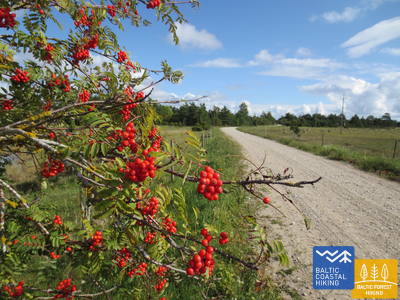
Šioje Baltijos pajūrio pėsčiųjų maršruto atkarpoje pamatysite tradicinį kaimo kraštovaizdį. Pamario raištis – seklios įlankos, pusiasaliai ir kyšuliai, apsupti pajūrio pievų, nendrių, seklių lagūnų, pelkių, taip pat sunkiai prieinamų salų. Einant nedideliais kaimo keliukais, rudeniškai nusėtais raudonų šermukšnių, galima pamatyti etnografiškai primenančias individualias sodybas ir fermas su karvėmis ir ožkomis. Sodybų kraštovaizdžiai keičiasi su uolų tvorų liekanomis, dirbama žeme ir kadagių miškais. Prieiga prie jūros ir poilsio zonos yra į pietus nuo Ranniku ir netoli Kastnos kaimo.
Matsi Port
Takas supažindina lankytojus su buvusiu Matsi žvejybos uostu. Jis yra 500 metrų ilgio (atgal į abi puses). Takas prasideda automobilių stovėjimo aikštelėje (GPS: 58.360251, 23.746683). Paviršius sudarytas iš asfalto, betono ir žvyro. Vėjuotomis sąlygomis takas gali būti padengtas smėliu, todėl neįgaliojo vežimėliams gali prireikti pagalbos. Take yra lytėjimo objektai ir informacija Brailio raštu. Yra prieinamas tualetas. Jis yra šalia Jūrtakos.


39. Etappe. Matsi - Varbla.
Strände und Wälder
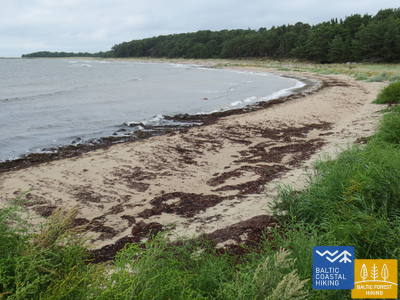
Пляж Матси – один из редких песчаных пляжей на дальнейшем отрезке тропы до Хаапсалу. Тропа Балтийского взморья делает круг через поселок Кулли и следующие 5 км ведет по маленьким, окруженным просторными лесами и дюнами дорогам, окрестности которых по осени богаты ягодами и грибами. Обогнув поместье Ууе-Варбла, тропа доходит до поселка Варбла.
Matsi Port
Тропа знакомит посетителей с бывшим рыболовецким портом Матси. Ее длина составляет 500 метров (туда и обратно). Тропа начинается от парковки (GPS: 58.360251, 23.746683). Поверхность включает асфальт, бетон и гравий. В ветреную погоду тропа может быть покрыта песком, поэтому инвалидам-колясочникам может понадобиться помощь. Тропа снабжена тактильными объектами и информацией, написанной шрифтом Брайля. Доступен туалет. Он расположен рядом с Юртакой.
45. Etappe. Penijõe - Laiküla.
Rund um das größte Feuchtgebiet Nordeuropas
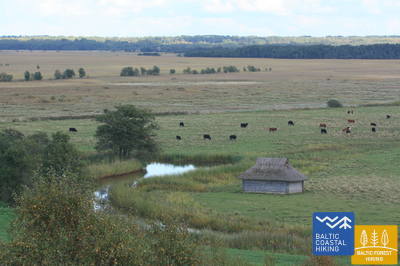
Тропа Балтийского взморья огибает дельту реки Касари – место ее впадения в залив Матсалу, где образовалась одна из крупнейших в Северной Европе заболоченных площадей с обширными тростниковыми полями, приморскими лугами, старицами и мелкими заливами, являющаяся важным местом гнездования и отдыха птиц во время миграции. Большая часть маршрута проходит по сельскохозяйственным землям и маленьким поселкам. В окрестностях Кирбла видно повышение рельефа – остров, который когда-то находился в Балтийском ледниковом озере, с древним берегом в его северной части.
RMK Rannajõe Observation Platform
Тропа знакомит посетителей с пойменными лугами Национального парка Матсалу, где во время миграции собираются большие стаи птиц. Доступ к платформе осуществляется по деревянному настилу длиной 100 метров (шириной до 110 см). Людям в инвалидных колясках понадобится помощь, так как уклон пандуса достигает 32%. Она расположена по адресу (GPS: 58.816865, 23.781363) рядом с Юртакой.


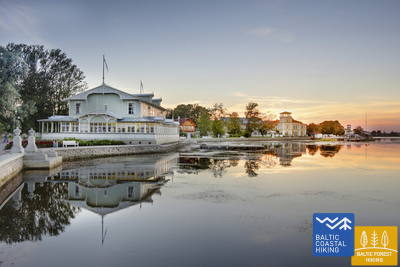
48. Etappe. Rohuküla - Haapsalu - Uuemõisa.
Haapsalu, der beliebteste Strand Estlands
Разнообразный отрезок Тропы Балтийского взморья. Первые три километра маршрута проходят по бывшей ширококолейной железной дороге Хаапсалу – Рохукюла, огибают залив Хаапсалу через мыс Пуллапяэ, пересекают прибрежные леса, где проложены тропы здоровья, и по прибрежным променадам и маленьким улочкам огибают город Хаапсалу. Пересекая небольшую заболоченную местность, этап тропы завершается в красивом парке Ууемыйза.
Paralepas dabas taka un pludmale
Природная тропа начинается на парковке (GPS: 58.940856, 23.515004) напротив пляжа Паралепа. Тропа идет параллельно береговой линии, огибает мелководный залив и пересекает небольшое водно-болотное угодье, достигая западной части города Хаапсалу. Длина тропы составляет 2 км в одном направлении. Покрытие: асфальт и деревянный настил. Вся тропа доступна для инвалидных колясок. Есть доступный туалет. Природная тропа совпадает с Юртакой.


Haapsalu Väike Viik
Mazais Vīks (Väike Viik) — это бывший залив, который в прежние времена был отделен от моря, а теперь популярен среди птиц. Он расположен в северной части Хаапсалу. Вокруг небольшого озера проложена тропа длиной около 2 км, по которой могут свободно передвигаться люди в инвалидных колясках и родители с детскими колясками. Поверхность покрыта гравием и асфальтом. Ближайший доступный туалет находится в туристическом информационном центре Хаапсалу. Тропа частично совпадает с тропой Юртака.


Haapsalu Promenade and Africa Beach
Один из самых красивых приморских променадов в Эстонии тянется вдоль восточного побережья Хаапсалу на протяжении 1,2 км. Поверхность вымощена булыжником. Вся длина променада подходит для людей в инвалидных колясках и родителей с детскими колясками. Рядом с пляжем Africa Beach находится детская игровая площадка и вышка для наблюдения за птицами. На дальней части тропы находится парк для обучения навыкам передвижения на инвалидной коляске, тренажеры и игровая площадка, адаптированная для детей с функциональными нарушениями. Тропа частично совпадает с тропой Юртака.


Uuemõisa Manor Park
Парк пересекает сеть троп, доступных для людей в инвалидных колясках. Общая длина троп составляет около 1,2 км. Покрытие тропы — гравий. Тропы частично пересекаются с тропой Юртака.


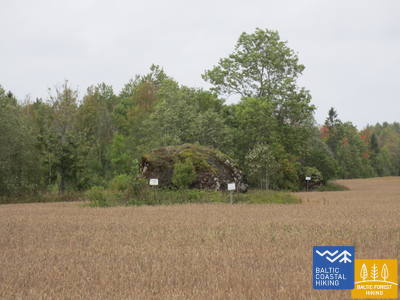
49. Etappe. Uuemõisa - Elbiku.
Um die Haapsalu-Bucht herum
В основном Тропа Балтийского взморья идет по обочине шоссе и только между поселками Ингкюла и Аулепа вьется по маленьким деревенским дорогам, где можно наслаждаться сельскими пейзажами с хуторами, валунами и пастбищами.
Uuemõisa Manor Park
Парк пересекает сеть троп, доступных для людей в инвалидных колясках. Общая длина троп составляет около 1,2 км. Покрытие тропы — гравий. Тропы частично пересекаются с тропой Юртака.
Silma Workshop and Nature Reserve
Silma Workshop — это природная школа, расположенная в природном заповеднике Silma. Из нее открывается вид на заросшие воды залива Хаапсалу и его ответвления, богатые птицами и растениями. Длина тропы составляет 0,4 км (туда и обратно) с поверхностью из протоптанной дорожки, гравия и травы. Мастерская доступна для инвалидных колясок, но требует помощи и предварительной регистрации, так как вдоль тропы есть ограждение. Она расположена примерно в 3,5 км от тропы Юртака.
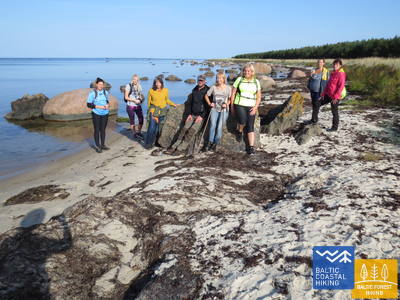
51. Etappe. Riguldi - Dirhami.
Ein Ort mit Meteoritenspuren
За исключением первых 3 км, маршрут идет вдоль берега моря. Преимущественно это песчаный пляж с красивыми дюнами (в том числе серыми) и валунами в море. На пляже могут быть выброшенные на берег водоросли, в некоторых местах он зарос густой растительностью. Напротив поселка Роослепа и в других местах в море и на берегу можно увидеть сильно выветрившиеся камни – т. н. брекчии, являющиеся сплавившимися в результате падения древнего метеорита и выветрившимися горными породами. В конце маршрута можно посидеть в кабачке, с террасы которого открывается красивый вид на море и порт.
Roosta Beach
От комплекса отдыха «Роста» к дюнам проложены дощатые настилы, доступные для людей на инвалидных колясках.


Dirhami Port
Vom mit Kies bedeckten Hafenparkplatz (GPS: 59.209328, 23.497846) (es kann Hilfe benötigt werden) können Sie zum Anlegeplatz des Fischerei- und Handelshafens Dirhami weitergehen. Auf einer Strecke von etwa 300 Metern (asphaltiert) können Sie die Aussicht auf die Küste des Finnischen Meerbusens und den Hafen genießen. In der Nähe befindet sich das charmante Restaurant Dirhami, das über eine spezielle Rampe erreichbar ist. Es befindet sich in der Nähe des Jūrtaka-Wanderwegs.


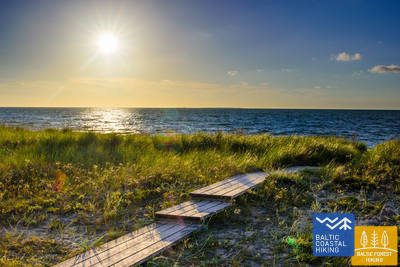
52. Etappe. Dirhami - Nõva.
Die raue Natur des Nordens
Ein Streckenabschnitt mit sehr vielfältigen Landschaften, der dem Wanderer die Natur der Nordküste Estlands nahebringt. Der Baltische Küstenwanderweg verläuft zum größten Tel der Meeresküste entlang, wo es in den Buchten herrliche Sandstrände und auf den Erdzungen mit Feldsteinen bedeckte Strände gibt. Im nördlichen Teil des Põõsaspea neem-Kaps (ein hervorragender Ort zur Vogelbeobachtung) sind Dolomit-Freilegungen zu sehen. Danach windet sich der Pfad durch das Naturschutzgebiet Nõva, wo sich ein hervorragender Blick auf weiße und graue Dünen bietet. Der Strand ist ein beliebter Ort für Fischer und Kitesurfer.
Dirhami Port
Vom mit Kies bedeckten Hafenparkplatz (GPS: 59.209328, 23.497846) (es kann Hilfe benötigt werden) können Sie zum Anlegeplatz des Fischerei- und Handelshafens Dirhami weitergehen. Auf einer Strecke von etwa 300 Metern (asphaltiert) können Sie die Aussicht auf die Küste des Finnischen Meerbusens und den Hafen genießen. In der Nähe befindet sich das charmante Restaurant Dirhami, das über eine spezielle Rampe erreichbar ist. Es befindet sich in der Nähe des Jūrtaka-Wanderwegs.
Peraküla beach and camping site
Vom Rastplatz und Parkplatz (GPS: 59.221567, 23.602891) aus gelangt man über einen Holzsteg (0,1 km) zu einer Aussichtsplattform mit Blick auf die Küste des Finnischen Meerbusens. Möglicherweise ist Hilfe erforderlich, da der Steg durch den Wind manchmal mit Sand bedeckt sein kann. Das WC ist teilweise zugänglich. Der Standort liegt in der Nähe des Jūrtaka-Wanderwegs.


58. Etappe. Laulasmaa - Vääna-Jõesuu.
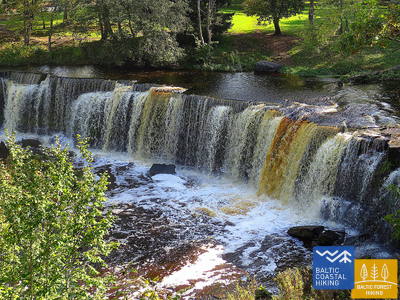
Der schönste Wasserfall Estlands
Aus landschaftlicher Sicht ist es der vielfältigste Abschnitt des Baltischen Küstenwanderweges. Geeignet ist er für ausdauernde Wanderer. Zu sehen bekommt man sowohl steinige Strände als auch Sandstrände und gute Badeorte, herrliche Kiefernwälder und den eindrucksvolle Türisalu-Fels sowie Jahrhundertsteine. Auf den kleinen Pfaden des Keila-Waldparks kann man den Keila-Wasserfall erreichen. Auch kann man die dem Leben der Küstenfischer gewidmete Ausstellung im Dorf Lohusalu besuchen.
RMK Keila-Joa Park nature trail
Der 2,1 km lange Weg führt die Besucher in den im englischen Stil gestalteten Keila-Joa-Park und zum beliebten Keila-Wasserfall. Die ersten 250 Meter vom Parkplatz (GPS: 59.393587, 24.294767) sind für Rollstuhlfahrer mit Assistent zugänglich. Die Oberfläche besteht aus Kies, Schotter und einem Naturpfad. Der Weg befindet sich in der Nähe des Jūrtaka-Weges.


60. Etappe. Tabasalu - Tallinna sadam.
Tallinn - Teil des UNESCO-Weltkulturerbes
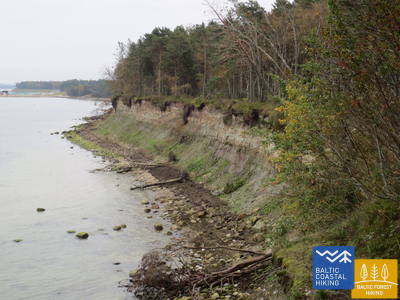
Bei Tabasalu überquert der Baltische Küstenwanderweg die Stadtgrenze von Tallinn und führt durch die Stadtteile Tiskre und Vismeistri zum Strand Kakumäe. Von dort läuft er im Bogen um die felsumschlungene Kakumäe-Halbinsel und deren vom Wald bedeckten Spitze herum Von hier aus bietet sich ein schöner Ausblick auf den Hafen von Tallinn. Gegenüber dem Stadtteil Õismäe verläuft eine herrliche Strandpromenade. Der Pfad umkreist das Freilichtmuseum Estlands und schlängelt sich der Strandpromenade entlang bis zum Strand Stroomi. Weiter verläuft der Routenabschnitt auf den Gehwegen des Stadtviertels Pelguranna bis zum Estnischen Meeresmuseum. Von dort aus führt der Pfad der Strandpromenade entlang und erreicht den Hafen von Tallinn – den Endpunkt des Baltischen Küstenwanderweges. Durch Estland sind ~ 620 Kilometer zurückgelegt worden.
Pēsakilas (Pääsküla) purva dabas taka
Der 4 km lange Weg führt die Besucher in verschiedene Waldarten und ein Moor. Zwei Kilometer des Weges sind für Rollstuhlfahrer zugänglich. Er liegt etwa 8,5 km vom Jūrtaka-Weg entfernt.


Pikakari beach
Der Strand Pikakari bietet Schwimmhilfen, Umkleidekabinen und eine Holzrampe für den Zugang zum Wasser. Der Service muss im Voraus unter +372 5666 2455 gebucht werden. Er liegt 2,5 km vom Jūrtaka-Wanderweg entfernt.
64. Etappe. Nida (dt. Nidden) - Pervalka (dt. Perwelk).
An den Ufern des Kurischen Haffs
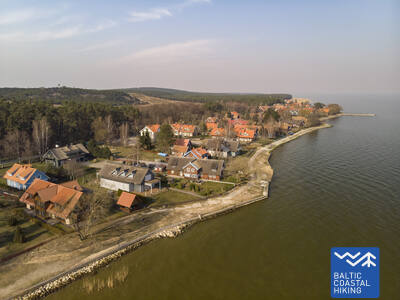
Der Meeresweg (lt. Jūrų takas) beginnt im Zentrum von Nida in der Nähe des Hafens. Er schlängelt sich weiter am Ufer des Kurischen Haffs entlang und öffnet einen schönen Blick auf das weite Wasser, das bis zum Ostufer des Kurischen Haffs liegende Insel Rusnė reicht. In Nida bestaunt man die typische Architektur der Kurischen Nehrung: einstöckige Holzbauten mit Dachziegel oder mit Schilf bedeckt, die Fensterläden in blau-weiß gestrichen. Weiter von Nida aus führt der Meeresweg zu dem Kap von Bulvikis hin (gegenüber dem Kap richtet sich der Blick auf eine Start-Landebahn des verwahrlosen Flughafens). Danach windet er sich auf kleineren Waldwegen, durch mit Kiefern bewachsenen Dünen auf und ab. Stellenweise schlängelt er sich über die Küstenwiesen mit ganz bescheidener Vegetation. Neben dem Weg sind Rastplätze und Vogelbeobachtungstürme eingerichtet. Im folgendem Abschnitt sind sehr eigentümliche, mit Flechten und Flora der Kurischen Nehrung typischer Art, bewachsene offene Küstenwiesen zu beobachten. In der Siedlung von Preila verläuft der Meeresweg an der Promenade entlang. Bis zu Pervalka schlängelt er sich über die Waldwege, Wander- /und Radwege bis in das Zentrum der Pervalka. Dieser Abschnitt verläuft durch den Nationalpark der Kurischen Nehrung (lt. Kuršių nerijos nacionalinis parkas).
Nida Promenade
Die Nida-Promenade erstreckt sich etwa 2 km vom Hafen Nida entlang des Kurischen Haffs und ist für Fußgänger und Radfahrer konzipiert. Sie verfügt über gut ausgestattete Rastplätze. Die Oberfläche ist modern gepflastert und für Rollstuhlfahrer zugänglich. Sie entspricht dem Küstenwanderweg.
65. Etappe. Pervalka (dt.Perwelk)- Juodkrantė (dt. Schwarzort).
Durch die imposantesten Sanddünen Nordeuropas
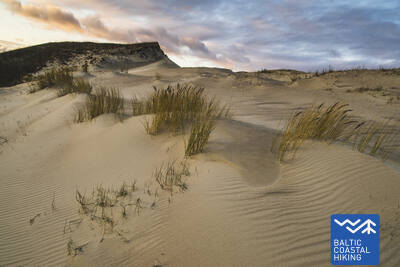
Hinter der Pervalka überquert der "Meeresweg" (lt. "Jūrų takas") die Kurische Nehrung in Ost-West-Richtung und erreicht die Küste der Ostsee. Eine weitere Strecke von ca. 13 km führt zu einem wunderschönen Sandstrand, der im Osten durch einem hohen Dünenrücken eingegrenzt wird. Der Dünenrücken wurde von Menschenhand geschaffen, um die Halbinsel vor Sandrutschen zu schützen. Vor dem Ort Juodkrantė biegt der Meeresweg nach Osten ab und überquert erneut die Kurische Nehrung durch steile, mit Wäldern zugewachsenen Dünen und führt weiter in die Richtung des Kurischen Haffs. Ein kleiner Abschnitt des Meeresweges schließt sich mit dem Weg über den Hexenberg (lt. Raganų kalnas) zusammen. Weiter geht es über die Uferpromenade von Juodkrantė zum Hafen. Die Strecke verläuft durch den romantischen Nationalpark der Kurischen Nehrung (lt. Kuršių nerijos nacionalinis parkas).
Juodkrantė Promenade
Die Juodkrantė-Promenade erstreckt sich etwa 1,4 km vom Hafen Juodkrantė entlang des Kurischen Haffs und ist für Fußgänger und Radfahrer konzipiert. Sie verfügt über gut ausgestattete Rastplätze und hat eine moderne Pflasteroberfläche. Sie ist für Rollstuhlfahrer zugänglich und verläuft parallel zum Küstenwanderweg.
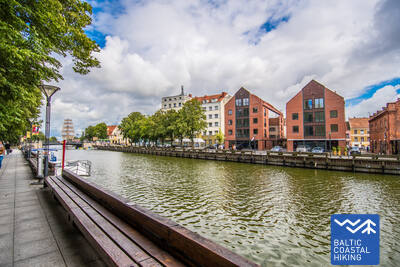
66. Etappe. Juodkrantė (dt. Schwarzort) – Klaipėda (dt. Memel).
Klaipėda – Seetor Litauens
Fortführend von der Küstenpromenade des Ortes Juodkrantė überquert der "Meeresweg" (lt. "Jūrų takas") die Kurische Nehrung in nordwestlicher Richtung auf kleinen Waldwegen, die sich entlang steiler, mit Kiefern bewachsener Dünenhänge schlängeln, bis man wieder an der Ostseeküste ankommt. Weitere 9 km verläuft der Meeresweg an den Sandstränden entlang. Auf der Ostseite wird er durch eine steile Düne, die die Nehrung vor durch den Wind verwehten Sand schützt, begrenzt. Außerhalb der Siedlung Alksnynė (vom Ufer aus unsichtbar) biegt er nach Osten ab und in den Wald der Latschenkiefer Pinus Mugo, den Militärstützpunkt der deutschen Armee während des Zweiten Weltkriegs durchquert, und sich den Ufern des Kurischen Haffs nähert. Danach verläuft der Meeresweg weiterhin durch die mit Kiefern bedeckten Dünen, von denen ein Ausblick auf die Stadt Klaipėda sich eröffnet. Die Route zwischen der neuen und alten Fähre verläuft zunächst über einen kleinen Pfad und dann über die Küstenpromenade. Von der alten Fähre überquert der Meeresweg (mit der Fähre) das Kurische Haff und endet im Zentrum von Klaipėda - auf der Danės-Straße bis zur Biržos-Brücke (dt. Brücke der Börse). Der Abschnitt bis zur Fähre passiert den Nationalpark der Kurischen Nehrung (lt. Kuršių nerijos nacionalinis parkas).
Juodkrantė Promenade
Die Juodkrantė-Promenade erstreckt sich etwa 1,4 km vom Hafen Juodkrantė entlang des Kurischen Haffs und ist für Fußgänger und Radfahrer konzipiert. Sie verfügt über gut ausgestattete Rastplätze und hat eine moderne Pflasteroberfläche. Sie ist für Rollstuhlfahrer zugänglich und verläuft parallel zum Küstenwanderweg.
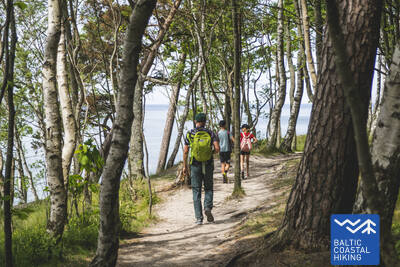
67. Etappe. Klaipėda (dt. Memel) – Palanga (dt. Polangen).
Durch den Regionalpark der Küste
Zuerst führt der Meeresweg (lt. Jūrų takas) der H. Manto Straße, durch das Zentrum der Stadt Klaipėda entlang, dann überquert er den Erholungspark und die Eisenbahn und an der Südseite der Siedlung Melnragė bevor er wieder an der Küste der Ostsee ankommt. Danach führt er weiter an der Strandpromenade und den schmalen, die Dünen schützenden Holzpfaden (Knüppelpfad) vorbei und erstreckt sich dann auf einem gemütlichen Weg, der ca. 10–20 m vom Wander- / Radweg entfernt durch die Wälder der Küste verläuft und die Zweite Melnragė hinter sich lässt - bis die Siedlung Giruliai erreicht ist. In der Nähe von Giruliai bevorzugt er für einen kurzen Augenblick den Genuss eines Strandes, dann führt er vom Ort Kukuliškės bis südlich von Karklė und anschließend dem sehr schönen Ufer des ehemaligen Litorina-Meeres, das mit unberührtem Wald bewachsen ist. Weiter verläuft er neben der malerischen, von den Wellen durchfluteten Klippe mit mehreren Aufsichtsplattformen inkl. den "Olando kepurė" (dt. Hut/ Mütze des Holländers ) in Richtung Karklė. Folgende 11 km von der Siedlung Karkle bis zum Botanischen Park verläuft der Meeresweg an sandigen Kiesstränden mit ihren wunderschönen großen Steinen. Dem Pfad im westlichen Teil des botanischen Parks folgend, erreicht der Meeresweg die "Meilės Alėja" (dt. Allee der Liebe) und führt zur Fußgängerbrücke von Palanga. Ein Großteil dieser Strecke passiert den Regionalen Park der Küstenregion (lt.Pajūrio regioninis parkas).
Palanga Sea Bridge
Das einzige Bauwerk dieser Art im Baltikum. Die Oberfläche besteht aus modernem Pflaster vor der Brücke und Holz auf der Brücke selbst. Die Brücke ist für Rollstuhlfahrer zugänglich. Die Hauptfußgängerzone von Palanga, die J. Basanavičiaus-Straße, ist ebenfalls zugänglich. Die Brücke liegt in der Nähe des Küstenwanderwegs.

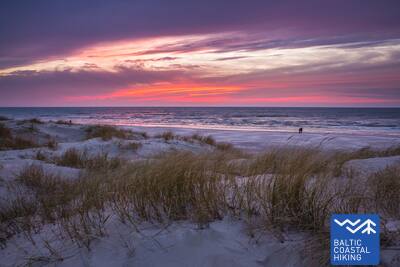
68. Etappe. Palanga (dt. Polangen)– litauisch-lettische Grenze (Šventoji) (dt. Heiligenau).
Durch die beliebtesten Küstenkurorte Litauens
Nachdem der Meeresweg (lt. Jūrų takas) über eine Brücke das Flüsschen Rąžė überquert hat, schlängelt er sich weiter, der Fußgänger- / Joggingpfad "Labrytys" entlang und führt zum Meer in der Nähe der Kontininkų-Straße. Abwechslungsreich geht er dann 9 km am sandigen, vom Meer umgespültem Strand weiter bis zur alten Mole des Städtchen Šventoji, entlang. Anschließend windet er sich um die Mündung des Flusses Šventoji, führt durch das Kurort-Städtchen, am Ende der Kopų-Straße überquert er den Fluss mit einer Fußgänger - Hängebrücke und lotst wieder zum Strand hinaus. Der Meeresweg macht noch einmal einen kleinen Bogen in der Nähe des Heiligtums "Žemaičių Alka" um dann am Sandstrand entlang nach 3 km die litauisch-lettische Grenze zu erreichen.
Palanga Sea Bridge
Das einzige Bauwerk dieser Art im Baltikum. Die Oberfläche besteht aus modernem Pflaster vor der Brücke und Holz auf der Brücke selbst. Die Brücke ist für Rollstuhlfahrer zugänglich. Die Hauptfußgängerzone von Palanga, die J. Basanavičiaus-Straße, ist ebenfalls zugänglich. Die Brücke liegt in der Nähe des Küstenwanderwegs.