
Section 66. Juodkrantė – Klaipėda. The Curonian spit.
Section 66. Juodkrantė – Klaipėda.
Worth seeing
 Worth seeing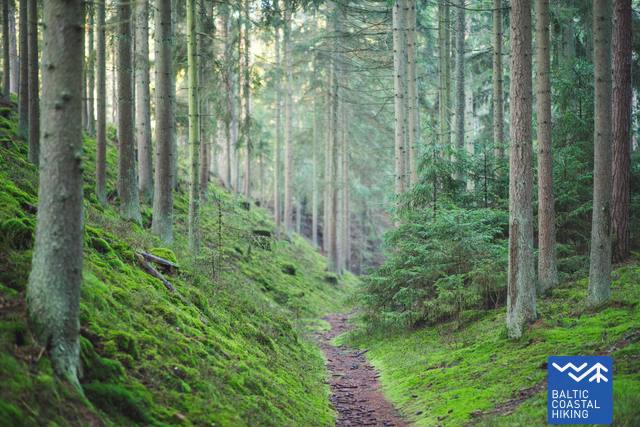
|
Formed in the 19th century, this promenade was the favorite spot for long walks in the historic resort town of Juodkrantė. The pathway has retained its name of Dendrological Trail due to the variety of non-local plants. |
|
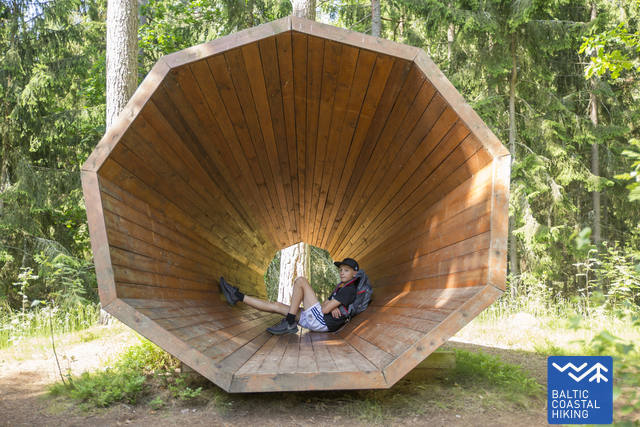
Forget your daily troubles and spend a minute or two listening to the sounds of the forest with the help of a sound catcher placed in the old forest of Juodkrantė. |
This is a place of legends and mysticism. Long ago, the entire Curonian Spit could be seen from atop of this hill. The Lighthouse of Juodkrantė stands here now. |
|
Amber was excavated here in the 19th century. |
|
This Defense Complex was built by the Germans to defend the City of Klaipėda against the Soviet artillery and air raids during the Second World War. |
|
|
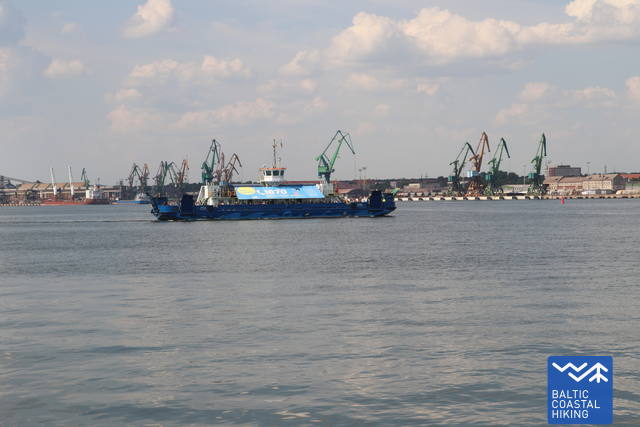
Kiaulės Nugara is the only island in the Curonian Lagoon. In 2014, the Independence LNG carrier was moored to the island. |
The museum is located in Kopgalis Fortress and has a large exhibition on the Baltic and other sea creatures. |
|
The history of the City of Klaipėda began here in 1252. Historical exhibitions can be visited in the dungeons of the castle. |
|
Timber framed houses and the defensive fortifications dating back to the 17th-18th century are the highlights of the Old Town of Klaipėda. |
|
|
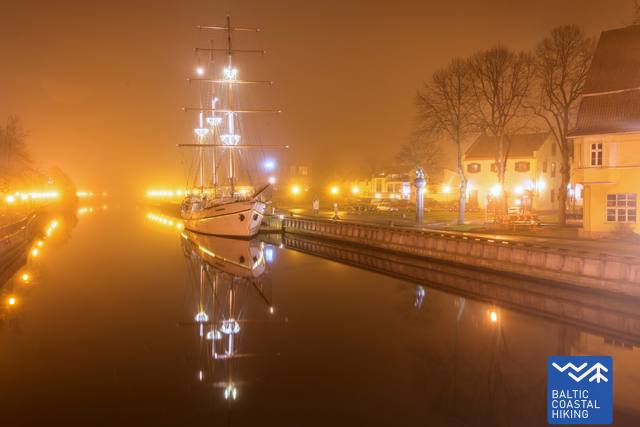
This wooden sailing ship has already become a symbol of the City of Klaipėda. |
|
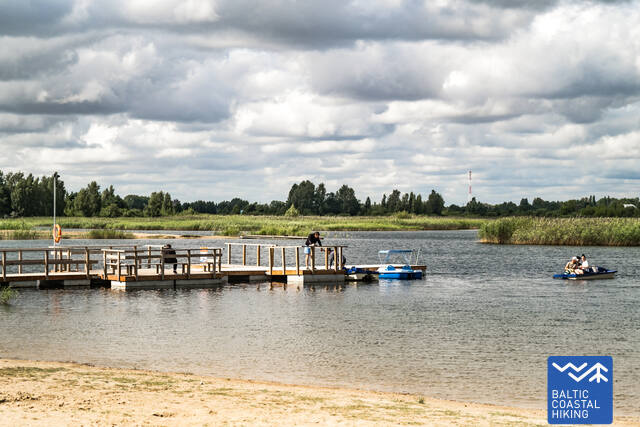
Quarry ponds are artificial bodies of water that formed due to human activity – excavating gravel and sand for construction purposes. In the long term, the quarries filled up with water, which allowed for the formation of a typical ecosystem found in standing water bodies. The quarry ponds found on the outskirts of Gargždai are no exception. Thus, an oasis for the flora and fauna typical to standing bodies of water developed here. Birds observed hereVisitors can usually see mallards, great crested grebes, and mute swans here. In Autumn and Spring, the quarry ponds might be quite the sight for birdwatchers. Birds like the tufted duck, the common goldeneye, the common merganser and the smew, the northern pintail, and the gadwall like to dwell here. Some birds live on the banks of the quarry ponds – the reedbeds. These include the common reed bunting, Savi’s warbler, the great and the Eurasian reed warblers, the western marsh harrier, and the common moorhen. At Dovilai quarry ponds, visitors might also see species included in the Red Data Book of Lithuania – the Eurasian and little bitterns. Despite it being extremely hard to spot them, hearing their songs is not that difficult. Just keep your ears open during May through July. The voice of the little bittern is reminiscent of a dog’s bark, while the Eurasian bittern sounds like blowing on a bottle. All other birds are not that difficult to spot and hear. Parking lot 55.680885, 21.370948 Binoculars rentalKlaipėda district tourism information centre Kvietinių gatve 5-2, Gargždai Ph. +370 62081901 |
1. Dendrologischer Weg (Bloksberg-Promenade) Im 19. Jh. erstellte Promenade war ein beliebter Ort für Spaziergänge im historischen Kurort Juodkrantė. Auf Grund der Artenvielfalt von importierten Pflanzen wurde der Weg auch dendrologisch genannt.
GPS: 55.54725, 21.11867
2. Geräuschfalle. Um den alltäglichen Sorgen zu entfliehen und die Geräusche des Waldes aufzunehmen, wird die Schallfalle, installiert im alten Wald der Juodkrantė behilflich sein. GPS: 55.55486, 21.12006
3. Bloksberg (Raganos) kalnas (dt. Hexen Berg). Dieser Ort ist von Legenden und Mystik umgeben und schafft dadurch zauberhafte Eindrücke und Stimmungen.Von dieser Düne aus, war es möglich - die ganze Kurische Nehrung mit bloßem Auge zu erfassen. Auf der Spitze ist neuerdings der Leuchtturm von Juodkrantė eingerichtet worden.
GPS: 55.55645, 21.11589
4. Ginataro įlanka (dt. Bernsteinbucht). Im 19. Jh. wurde hier Bernstein abgebaut.
GPS: 55.55236, 21.12670
5. Verteidigungskomplex Alksnynė. Das ist eine Verteidigungsanlage, die um die Stadt Klaipeda während des Zweiten Weltkriegs von den Deutschen gebaut wurde, um vor sowjetischen Luftangriffen und Artilleriebeschüsse zu schützen. GPS: 55.65707, 21.12422
6. Kiaulės nugaros sala (dt. Schweinerückeninsel) und „Independence. Sie ist die einzige Insel auf der Kurischen Nehrung. Im Jahr 2014 wurde zu der Insel ein Terminal-Schiff-Lager des Flüssiggas “Independence” errichtet. GPS: 55.66217, 21.13723
7. Meeresmuseum. In einer Festung am Ende der Dünen gewährt das eingerichtete Museum einen Blick auf die Bewohner der Ostsee und der anderen Meere.
GPS: 55.71660, 21.09975
8. Burgplatz von Klaipėda. Hier begann im Jahr 1252 die Geschichte der Stadt Klaipėda. In den Kellern des Burgplatzes laden die historischen Expositionen die Besucher in eine vergangene Welt ein. GPS: 55.70555, 21.12946
9. Altstadt von Klaipėda. In der Altstadt von Klaipėda gibt es reichlich Fachwerkhäusern und gut erhaltene Verteidigungsanlagen aus dem 17.- 18. Jahrhundert zu sehen.
GPS: 55.70869, 21.13324.
10. Biržos tiltas (dt. Brücke der Börse) und „Meridianas“. Das hölzerne Segelschiff "Meridianas" ist bereits zu einem Symbol der Stadt Klaipėda geworden.
GPS: 55.71007, 21.13347
Weitere Sehenswürdigkeiten in Klaipėda:
www.klaipedatravel.lt