
Atkarpa 14. Sīkrags - Saunags.
 Verta pamatyti
|
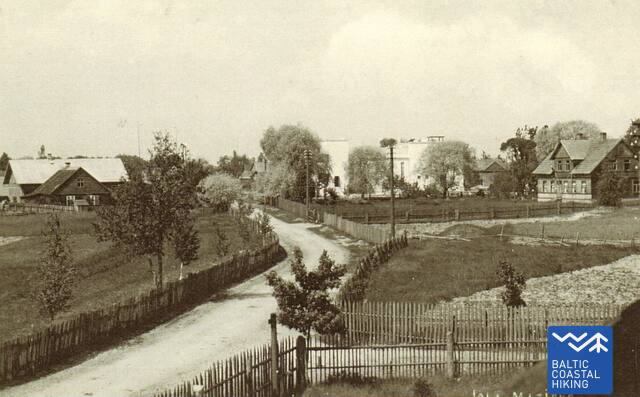
Among the earliest and largest fishermen settlements on the coast of Northern Kurzeme. First mentioned in written sources in 1387 under the name of „Willa minor Irwa”. The village is located not far from the mouth of the River Mazirbe. Livonians used to call the river Irē joug, and the village – Irē. Already since earlier times the village was split into two parts — Livonian fishermen village closer to the sea and the Southern part of the village with Irbe Church, manse, cemetery, tavern and some Dundaga manor houses further off the coastline. During the first independence years of Latvia, Mazirbe represented a fast-growing village with 77 farmsteads and fishermen houses and 82 residential houses (in 1939). Besides church and manse, the village also had a post office, a school, several shops, a drug store, a hairdresser’s and a photo salon. Bricks were made in Brausku Brick-Kiln, timber came from the local saw-mill, and by narrow gauge train the village was linked to Ventspils, Dundaga and Stende. Mazirbe was a lively cultural and economic centre with its own fishermen society „Zivs”. In 1935, the population of Mazirbe reached 438 with only 66 Livonians (15%). Besides 350 Latvians (80%), other nations represented in the village were Estonians, Germans, Russians, Belorussians. The village of Mazirbe played a crucial role in the Livonian Awakening movement. Nowadays, life is not as busy in the village as it used to be in the mid-20th century; yet the village is still alive: there are around 60 houses, most of which are inhabited only during summers, to tell the truth. Around 90 inhabitants have registered Mazirbe as their place of residence. During summer, the number of residents experiences rapid growth on the account of tourists and people coming to live here for the summer. Around ten fishermen still make a living from fishing. There is a shop and a few guest houses. |
|
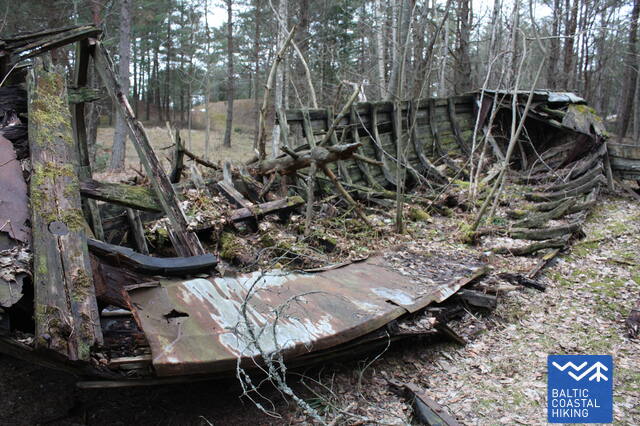
In some coastal villages in Northern Kurzeme fishing was restricted, while in the village of Mazirbe this was allowed under strict supervision of border guards. The boats in the seaside forest in Mazirbe are a result of the change - the old vessels were replaced by newer ones, leaving the first back in the forest. |
|
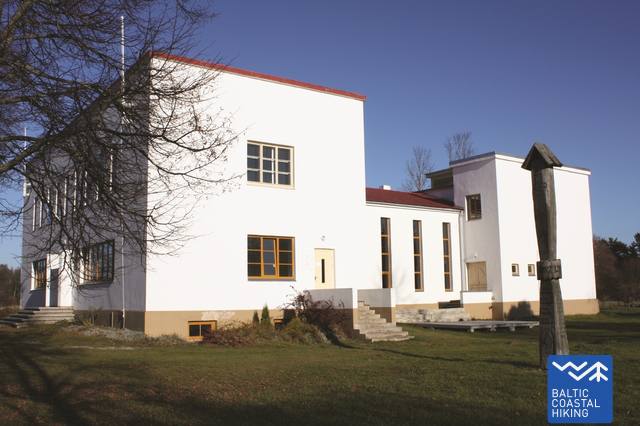
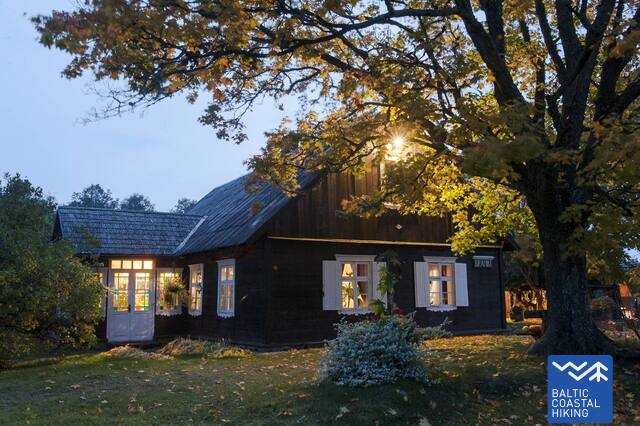
Built in 1939 “with the help of the fatherland Latvia and related nations - Finns, Estonians, Hungarians”. This is a national architectural monument. Annual Livonian Festival has been taking place on the first Saturday of August. +371 28603233 |
|
Можно также осмотреть выставку «Ливское вязание крючком» (вязаное рукоделие). +371 29469165 |
|
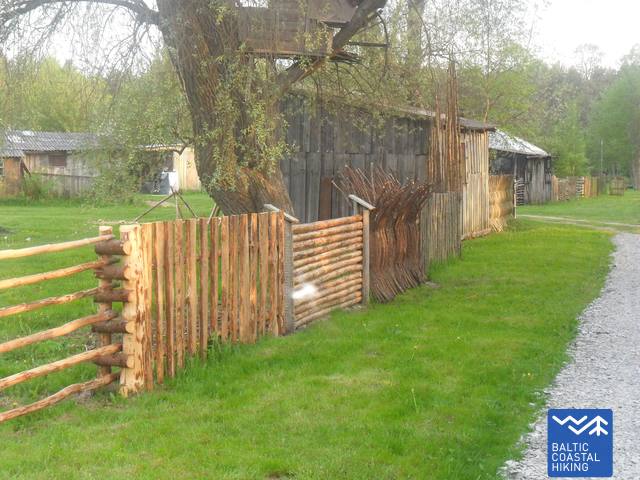
Посетители могут принять участие в копчении рыбы (камбала, а также сарган и лещ), отведать продукцию и послушать рассказ о традициях прибрежного рыболовства. В «Кроги» представлено примерно 20 видов заборов побережья, характерных для Берега ливов. |
|
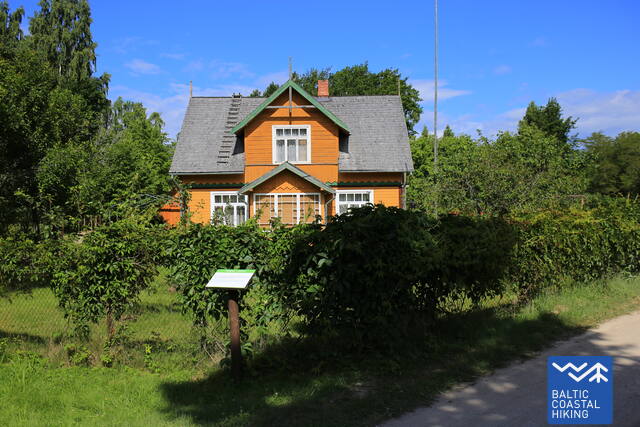
На побережье Питрагса видны остатки мола. Мол построен в 1938 году для сбора морских удобрений, которыми жители взморья удобряли свою скудную землю. На мелях Питрагса покоится много затонувших кораблей, а на берегу моря после шторма можно найти обломки старинных кораблей. |
|
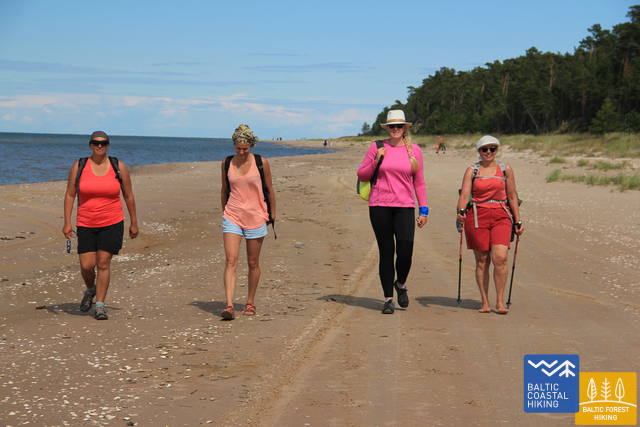
Считается самым молодым ливским прибрежным поселком (XVII век). «Anduļi» – самое древнее подворье в Кошрагсе. Сегодня в Кошрагсе 13 домов, но постоянно заселены лишь несколько. |
|
В Саунагсе постоянно заселено около 6 подворий, летом появляются дачники, тогда оживают около 28 поселковых домов. |